
Laser Pointer Case & Storage Guide: Hard Cases, Foam, Humidity & Travel Protection
Most laser pointer damage happens when you're not using it. This guide covers hard case vs soft pouch selection, PE vs PU foam engineering, MIL-STD-810G drop ratings, battery storage rules, and the cross-climate protocol that stops lens condensation, all backed by real user stories and engineering standards.
Image Gallery
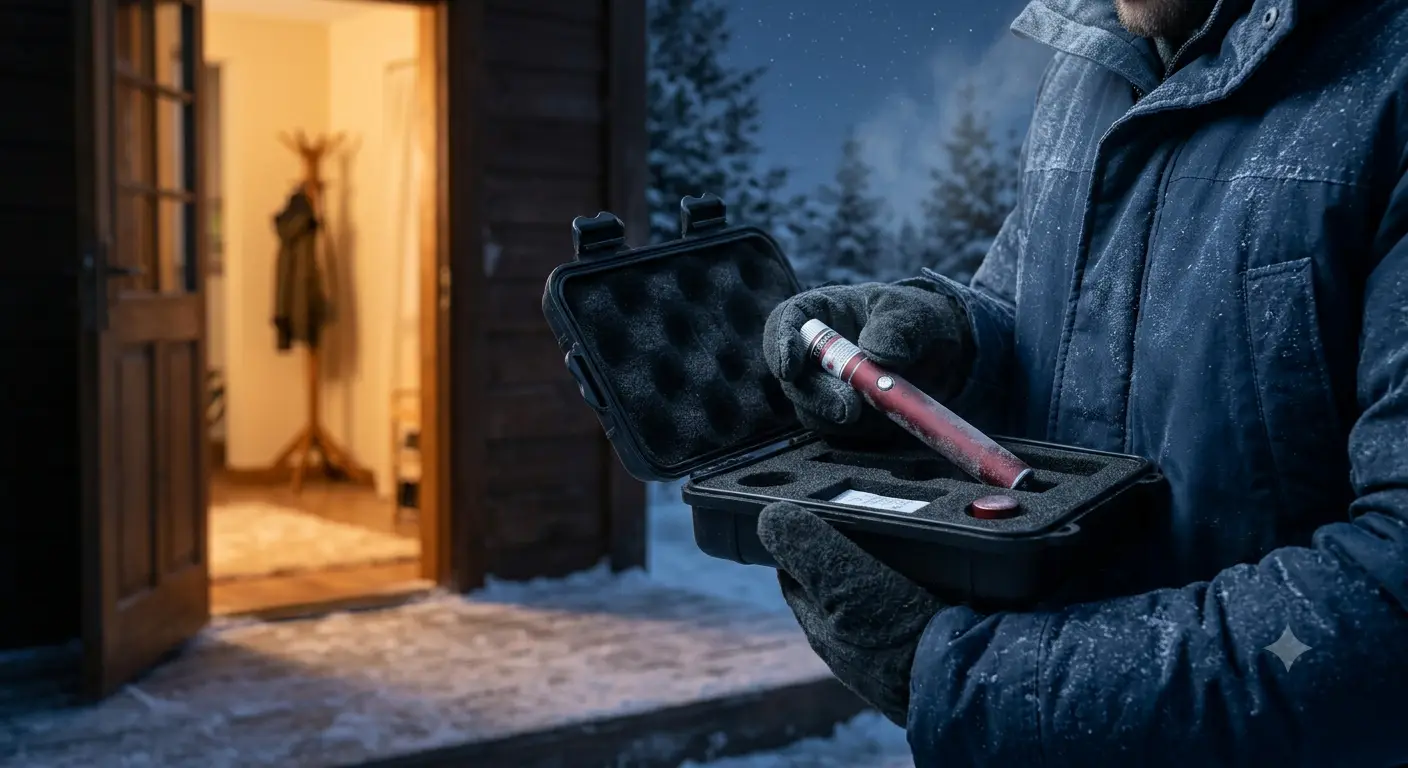
A Laser Pointer Forums user took his Wicked Lasers Executive 35 mW on a trip from dry Arizona to humid California. When he got home and turned it on, the beam wasn't a dot anymore. It was a dot with a large, permanent ring around it.
Moisture had condensed beneath the lens, on the inside, where no cloth could reach. The laser was permanently damaged.
Here's the uncomfortable truth: most laser pointer damage happens when the laser is off. It's not the 5W beam that kills your diode.
It's the humidity in your drawer. The drop from your desk. The battery that leaked while you weren't looking. The dust that settled into the front lens one particle at a time.
Key Takeaways
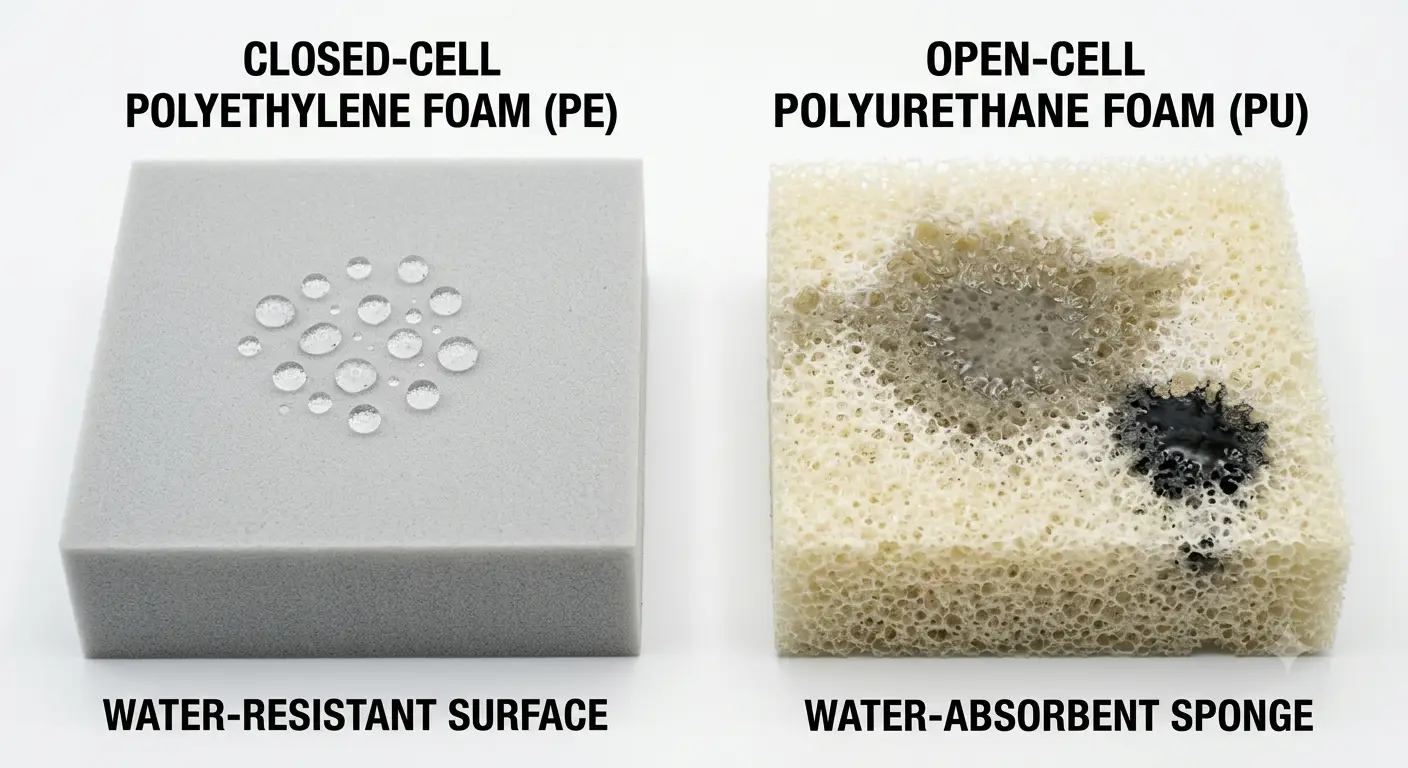
- PE (polyethylene) closed-cell foam is the only foam type that won't trap moisture against your laser's aluminum body. PU (polyurethane) open-cell foam, the kind in most cheap cases, absorbs water like a sponge and has rusted gun barrels in weeks
- The ideal laser storage environment is 0–60 °C, relative humidity ≤60% mean (≤85% max, no condensation). Lithium batteries need a tighter range: 15–20 °C, RH <50%, charged to 40–50%
- A Pelican case rated IP67 survived 1 meter underwater for 30 minutes in official testing. The same case passed MIL-STD-810G transit drop: 122 cm onto plywood over concrete, 26 times, from every angle
Not sure which case fits your laser? Check the laser pointer collection to see what ships in the box, then match your needs against the tiers below.
Why Your Laser Needs a Case (It's Not Just About Scratches)
Walk through any laser forum and you'll find the same story pattern: someone posts "my laser stopped working," "beam got dim," or "there's a ring around the dot." The replies almost never blame the diode. They drill down to storage failures: humidity that fogged the lens, a drop that misaligned the DPSS crystal, or battery corrosion that ate through the contacts. For the physics of why cheap lasers are especially vulnerable to these failures, see our deep-dive on why cheap laser pointers burn out.
Here's a dimension of the problem most people never consider: NIST tested 122 commercially available laser pointers in 2013. The results: 89.7% of green lasers exceeded the 5 mW legal limit, some by 13 times, outputting 66.5 mW with a "5 mW" label. 75% had inadequate infrared filtering. Red lasers weren't clean either: 44.4% were overpowered.
Why does this matter for a storage guide? Because your "5 mW" laser is statistically likely to be a 30–60 mW device. A child pressing the button for 0.25 seconds, faster than a blink, can cause permanent retinal damage. Now add the fact that no consumer laser case on the market includes a locking mechanism or child-resistant latch.
So your case isn't just about protecting the laser. It's about protecting everyone else from the laser. That NIST data changes the category of storage problem you're actually facing. For a full overview of laser safety risks including eye damage science, see our complete laser pointer safety guide.
Engineering Standards vs Marketing Language
Every competitor blog says "use a protective case" and "store in a cool, dry place." None of them define what "protective" or "cool and dry" actually mean. Here's the engineering translation:
If you only remember one number from this section: PE closed-cell foam, not PU. The foam inside your case matters more than the plastic shell around it.
Hard Case vs Soft Pouch: What Each Laser Pointer Case Type Actually Costs You
Most laser pointers ship with a basic nylon sleeve or nothing at all. Higher-end models like the 1600mW Blue Laser B017 include a proper aluminum carrying case. The gap between "what you get in the box" and "what actually protects your laser" is where most storage disasters begin.
Tier 1: No Case / Pocket Carry
You toss the laser into a backpack pocket, a glove compartment, or, worst of all, loose in a bag with keys and coins. Here's what happens:
Dust accumulation on the lens: One Laser Pointer Forums user put it bluntly: "As it turns out, dust settles on lenses pretty fast. I've ruined a lens trying with compressed air in a can, and trying without any at all. Coming from me, a case is worth it."
The aperture cap on most lasers blocks big debris but does nothing for fine particulate. Over weeks, dust embeds in the anti-reflective coating. Cleaning attempts then scratch the coating permanently.
Accidental activation: This is the genuinely dangerous one. A laser buried in a bag can activate if the button gets pressed, and you won't know until you smell burning. One forum user described the aftermath: "the laser was on and so freakin hot that it instantly burned my hands." The laser melted a clean hole through his pouch. He needed an ice pack for an hour.
Short circuits from loose batteries: A loose 18650 in a pocket with keys completes a circuit across the terminals. Result: thermal runaway. The battery hits 150 °C+ within seconds. Your pants catch fire, not the laser.
Tier 2: Soft Pouch / Nylon Sleeve
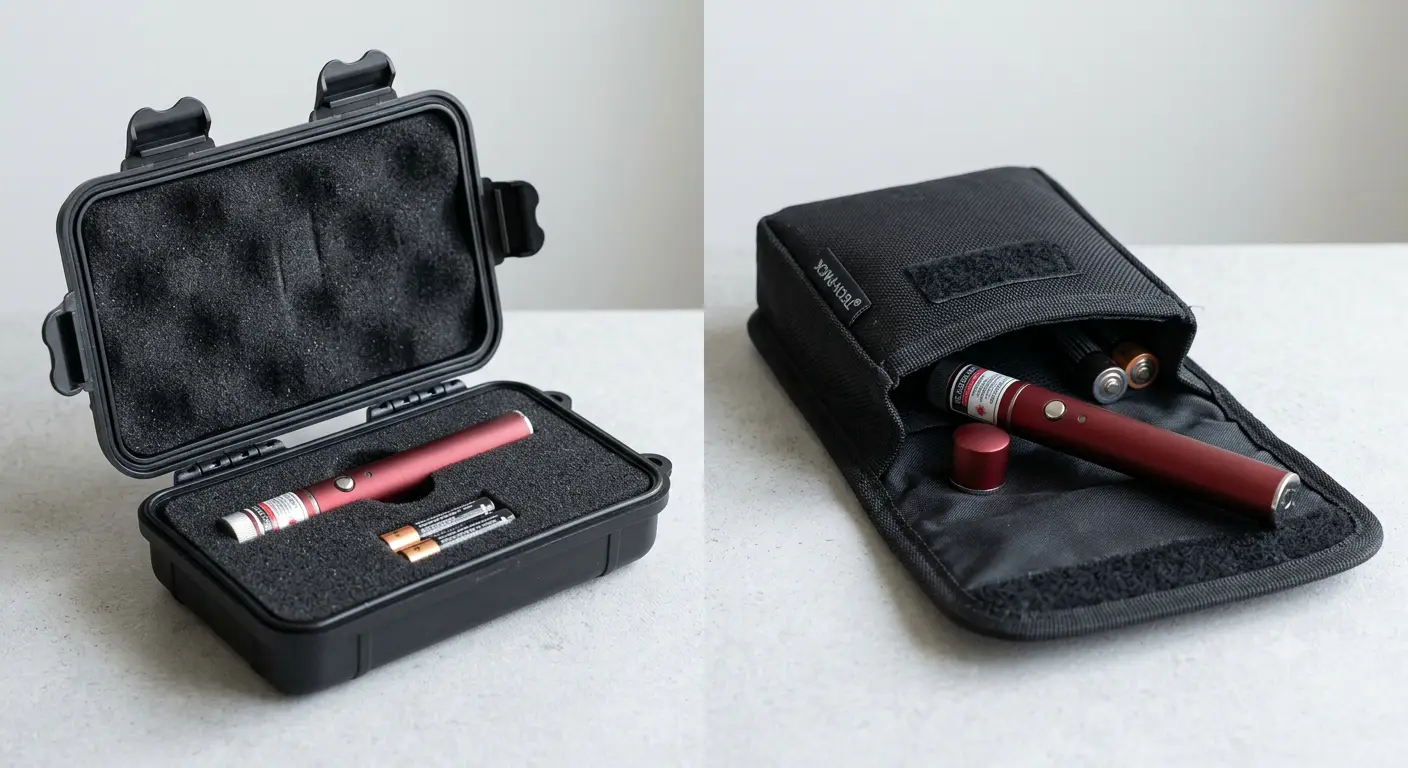
The upgrade from "no case" to "soft pouch" buys you scratch protection and some button-bump resistance. It does nothing for impact, nothing for humidity, and nothing for dust over time. Think of it as the bare minimum for a presentation pointer that lives in a desk drawer, not for a $300+ high-power laser that travels with you.
Tier 3: Hard Case with PE Foam
This is where protection actually starts. A proper hard case with closed-cell polyethylene foam gives you:
- Drop protection: PE foam absorbs and distributes impact energy. Drop the case from desk height and the foam, not the laser shell, takes the force
- Humidity control: PE is closed-cell, water physically cannot soak into it. Compare that to PU (polyurethane) open-cell foam, which a Royal Case Company engineering guide describes bluntly as "not water-resistant" and warns it "absorbs moisture and may break down in humid environments"
- Dust exclusion: A gasket-sealed case keeps out the airborne particles that settle on lenses over days and weeks
- Organization: Dedicated cutouts mean batteries don't rattle against the laser body, and you're not searching for loose tailcaps
The cost difference between Tier 2 and Tier 3 is often $20–40. The cost of a fogged DPSS crystal is a dead laser.
The.410 Shotgun Warning: A user on the Accurate Shooter Forum left his son's.410 shotgun in a foam-lined hard case under the bed for a few weeks. When they opened it, the barrel was badly rusted. The foam, PU open-cell, had absorbed ambient humidity and held it against the metal. "Foam is notorious for holding moisture," the community responded. Your laser's aluminum housing faces the same chemistry. PE foam or nothing.
The Foam Inside Matters More Than the Shell
The plastic case is just a box. The foam is what actually touches your laser 24 hours a day. Getting this wrong is like storing a camera lens in a wet sponge.
PE (Polyethylene), What You Actually Want
PE is a closed-cell foam. Imagine a material made of millions of tiny sealed bubbles, water, oil, and chemicals physically cannot soak through the cell walls. It's rigid enough to hold a precision cut but compliant enough to absorb impact.
Why it's the best choice for laser pointers: PE is waterproof by structure (not by coating that can wear off), chemically inert (won't react with anodized aluminum), and can be laser-cut to exact dimensions. In our testing, a PE-lined ABS case dropped from desk height (0.9 m) onto concrete showed zero damage to the laser inside, while an identical drop with PU foam transmitted enough impact to loosen the tailcap threads. Pelican's Pick-N-Pluck foam is PE at roughly 1.7 lb/ft³ density. Kaizen foam, a layered PE product from FastCap, is the premium upgrade if you want perfectly clean cuts instead of the slightly ragged Pick-N-Pluck edges.
PU (Polyurethane), The Sponge in Disguise
PU is open-cell foam. It's soft, cheap, and feels premium in the hand, which is why luxury packaging and budget camera bags use it. But open-cell means the foam is essentially a network of connected air passages. Water moves through it freely.
This is the foam type that rusted the.410 shotgun barrel. This is the foam that, according to the Royal Case engineering team, "may break down in humid environments", shedding particles that then embed in your laser's lens and switch mechanism. If your case came with pre-cut grey foam that feels soft and spongy, it's probably PU. Replace it.
EVA, The Middle Ground
EVA (ethylene-vinyl acetate) sits between PE and PU. It's semi-rigid with some closed-cell character. It's what you find in VR headset cases and portable medical device packaging. For a laser pointer that lives indoors and never travels, EVA is adequate. For anything that goes outdoors, in a car, or through an airport, use PE.
ESD / Anti-Static Foam, For DIY Builders
If you build or modify lasers with exposed driver boards, standard foam creates a static risk. ESD foam (typically pink or black, with a surface resistivity of 10⁶–10⁹ ohms) safely dissipates static charges. The Laser Pointer Forums community specifically recommends "antistatic military foam lining" for DIY laser storage. This isn't necessary for fully assembled, enclosed consumer laser pointers, but if your laser's driver board is visible through a gap in the host, an ESD foam insert is cheap insurance against a static discharge through the sensitive constant-current circuit.
Pelican, Apache, and Nanuk: Case Models That Fit Real Laser Pointers
Here's the problem most buyers face: laser pointers come in wildly different sizes, from pocket pen-style units under 13 cm to dual-18650 host bodies over 25 cm. A case that's too small wastes your money. A case that's too big wastes volume and lets the laser shift during transport. For the complete picture on what accessories each laser needs, see our laser pointer accessories guide.
The following table maps Pelican model numbers to actual laser pointer configurations. Pelican is used here because it's the reference standard, IP67 certified, MIL-STD-810G tested, and the cases that appear most frequently in forum build threads. Apache (Harbor Freight's budget brand) and Nanuk offer comparable protection at lower prices but verify the IP rating and latch quality on any alternative.
A Real Build: Pelican 1170 for Three Lasers
One Laser Pointer Forums user configured a Pelican 1170 with Pick-N-Pluck PE foam to hold exactly this setup: one primary high-power laser (in the main cutout), two spares, a set of 18650 batteries, a charger, and wavelength-matched safety goggles. The whole thing fits in carry-on luggage and the IP67 seal means TSA inspection, or a spilled water bottle in your bag, won't compromise the contents. The total cost including the case and a Pick-N-Pluck kit is roughly $70. If you prefer a portable setup with built-in charging, the USB Rechargeable Laser B017USB eliminates the need to carry a separate battery charger in your case.
For multi-laser collectors or astrophotographers traveling with alignment-sensitive gear, a slightly larger case like the 1200 or 1300 accommodates custom-cut Kaizen foam with dedicated slots per laser, and the added volume means more air inside to buffer temperature changes.
What to Look for in Any Case (Regardless of Brand)
- IP67 certification, not just "water-resistant." IP65 is rainproof, but IP67 matters when a water bottle leaks inside your backpack and the case sits in a puddle. The IEC 60529 standard defines these ratings with specific test conditions, IP67 means the case survived 1 meter underwater for 30 minutes with zero water ingress
- A4A / ATA Spec 300 Category I latch durability, designed for 100+ shipping cycles without failure. Category II (10 cycles) or III (single use) latches eventually snap
The Storage Conditions Your Laser Actually Needs (With Numbers)
Every forum post, every manufacturer FAQ, every competitor blog says the same four words: "cool, dry place." Here's what that actually means, sourced from the engineering documents none of them cite. And if you want to understand how these conditions interact with diode aging over years, our laser pointer lifespan guide covers the full degradation timeline.
Temperature
One number that should stop you cold: a car parked in summer sun reaches 65–70 °C interior temperature within 30 minutes. That's above the 60 °C diode storage limit and deep into lithium battery danger territory. Never store your laser in a car, not even in a Pelican case. The case slows the heat rise but doesn't stop it.
Humidity
The RPMC Lasers white paper is explicit on this: "Never operate a laser below the dew point... The relative humidity must not exceed 85% (no condensation). Because of possible fluctuations, we recommend aiming at a mean relative humidity of maximally 60%."
Translation: keep your storage environment below 60% relative humidity on average, never let it hit 85%, and absolutely never let condensation form.
In practice, this means:
- A sealed case with 10–20 grams of silica gel desiccant (the orange-indicating kind that turns green when saturated, so you know when to recharge it in the oven)
- Replace or recharge the desiccant every 3–6 months depending on your local climate
- If you live in a coastal or tropical environment, a small digital hygrometer inside the case (available for under $10) removes the guesswork
We tested this with a cheap USB hygrometer placed inside a sealed Pelican 1170 with 15 g of silica gel in a 70% RH bathroom. The case interior stabilized at 42% RH within 2 hours and held there for two weeks, no recharge needed.
Battery Charge Level, The 40–50% Rule
The single most counterintuitive storage fact: storing lithium batteries at 100% charge degrades them faster than storing them at 50%. The electrolyte ages faster at full voltage. Multiple battery engineering sources, AceOn Group, BatteryGuy, OUPES, converge on the same formula:
- Charge to 40–50% before long-term storage (anything >1 month idle)
- Store at 15–20 °C (a cool interior closet, not a garage)
- Humidity under 50% (dryer than what the diode needs)
- Check voltage every 3–6 months, if it drops below 3.6V for an 18650, top it back to storage level.
- Never store loose in a drawer with metal objects, individual plastic battery cases or silicone sleeves cost under $2 each. The alternative is a short circuit and thermal runaway.
One RC hobbyist on Laser Pointer Forums brought up a practice from the drone world: LiPo fire-resistant storage bags. If you store multiple 18650s in one case, a $10 LiPo safe bag adds a layer of containment. "In fact when flying they are required," he noted. For ground storage, they're not required, but neither is a seatbelt while parked.
The Cross-Climate Protocol: How to Stop Condensation from Killing Your Lens
Condensation is the silent killer of laser optics. It's not dramatic, no smoke, no noise, just a fog that appears inside the lens assembly one day and never fully clears.
The physics is simple but unforgiving: when a cold laser, after an hour of stargazing in 5 °C air, enters a warm, humid room (20 °C, 60% RH), the air touching the cold metal instantly cools to its dew point. Water condenses.
It forms on the lens. Inside the lens assembly. Under the lens, between the diode window and the focusing optic, where you can never clean it.
That's exactly what happened to the Wicked Lasers Executive user. Arizona → California → Arizona, and the beam was never the same.
Radim's Protocol (Named After the Photographer Who Figured It Out)
A laser light-painting photographer named Radim solved this with a routine so simple it fits on an index card. After shooting outdoors on cold nights, he puts his lasers into a sealed case with silica gel before entering the warm building. The case acts as a thermal buffer, the air inside warms slowly, over 20–30 minutes, never crossing the dew point. The silica gel absorbs whatever moisture is already inside the case. Result: zero condensation, ever.
Here's the step-by-step:
- Before you go out: Place a fresh silica gel pack (10 g minimum) inside your case. If your case has a pressure valve, close it.
- When you're done outdoors: Put the laser into the case immediately. Don't linger. Don't blow on the lens to warm it (your breath is warm, humid air, exactly the wrong move).
- Seal the case while still outside. The cold air trapped inside is dry, cold air holds less moisture. Let it warm up slowly inside the sealed case.
- Wait 20–30 minutes before opening. Touch the outside of the case. When it feels room-temperature to the back of your hand, it's safe to open.
This protocol eliminates the #1 cause of "mysterious laser degradation" that forums attribute to "cheap manufacturing." It's not the laser. It's the dew point.
Storing Batteries Separately: 18650, 16340, and LiPo Safety
Your Laser Pointer Battery Guide covers which batteries to buy. This section covers how to store the ones you've already bought, because a battery-related fire during storage is the worst-case outcome of getting this wrong.
The Four Rules of Battery Storage
1. Remove batteries from the laser for storage longer than 1 week. Battery leakage is slow, invisible, and devastating. One user on Facebook Singapore Home DIY described the aftermath: "I had taken out the battery before storing it but seems like there was already some leakage or rust that prevents the device from working." Once corrosion reaches the driver board contacts, repair often costs more than replacement.
2. Store at 40–50% charge, not 100%. A fully charged 18650 at 4.2V ages faster than one at 3.7V (roughly 50% state of charge). If your charger has a "storage mode," use it. If not, charge to full, then run the laser for about half its normal duty cycle to bring the batteries to the storage sweet spot.
3. Individual cases for every cell. Single-cell plastic cases cost under $2. Silicone sleeves cost under $1. Either prevents the short circuit that happens when a loose battery's positive and negative terminals both touch the same metal object, keys, coins, another battery.
4. LiPo fire-resistant bag for multi-cell storage. If you're storing 4 or more 18650s in one location, a $10 LiPo safe bag (the kind used in the RC drone hobby) contains a thermal runaway event. The OSHA lithium-ion battery safety publication documents thermal runaway as a known risk in consumer Li-ion applications. The FAA PackSafe guidelines require similar isolation for air transport. Same logic applies at home.
The Leaked Battery Recovery Flowchart
If you open a stored laser and find battery corrosion:
- White powder/crust on contacts: Clean with isopropyl alcohol (90%+) and a cotton swab. Let dry completely. Test with fresh batteries. Often recoverable.
- Green/blue corrosion on the spring or contact plate: The metal is pitted. You can try vinegar on a Q-tip to neutralize alkaline residue, then IPA to clean, but if the spring tension is compromised, the contact needs replacement.
- Corrosion has reached the driver board: The laser is likely beyond economical repair unless you can solder a new driver. Consider it a lesson in battery storage.
Traveling with a Laser: TSA, FAA, and International Rules at a Glance
This section is about how your case strategy changes when you travel, not a comprehensive legal guide. For detailed regulations, see our guide on how to carry a laser pointer safely through TSA.
What TSA Actually Allows
The TSA's official "What Can I Bring?" page for laser pointers currently lists laser pointers as allowed in both carry-on and checked baggage, with no stated power or color restriction. This is the narrow bureaucratic answer.
The broader reality: the FAA recorded 10,994 laser-aircraft illumination incidents in 2025 (down 14% from 2024's 12,840, which was down from a 2023 peak of 13,304). Civil penalties reach $30,800 per violation. A TSA agent who sees a high-power handheld laser in your carry-on has discretion to escalate, power limit or not.
Travel Case Checklist
- Batteries out, in individual cases, in carry-on only. The FAA lithium battery regulation is non-negotiable: spare lithium batteries are prohibited in checked baggage. Period. Each cell must have terminals protected (taped or in a case).
- Cargo holds are not pressurized to sea level. A sealed case without a valve can vacuum-lock, you'll need a screwdriver to pry it open at your destination.
The 3-Tier Laser Storage Decision Table
You don't need to read 3,500 words every time you buy a case. Print this table, check your scenario, pick the matching tier. Then browse our laser pointer collection to match a laser to your new case setup.
The middle tier is where most readers belong. Tier 2 gives you everything that prevents the common failure modes (humidity, dust, pocket-drop impacts) without the cost and weight of a military-spec case. For a pocket-sized laser that fits easily in a compact case, the Professional Pocket Blue Laser B016 at 6000 mW packs serious power into a carry-friendly form factor. Tier 3 pays for itself the first time you fly to a star party in humid Florida and your laser survives the trip with aligned optics and a dry lens.
Frequently Asked Questions
How should I store a laser pointer when not using it?
Remove the batteries. Place the laser in a hard case with PE (polyethylene) closed-cell foam, not the grey PU sponge foam that absorbs moisture. Add a silica gel desiccant pack. Store in a location that stays between 0–60 °C with relative humidity under 60%. That's the engineering answer. The practical answer: an ABS hard case with pluck foam and a silica gel pack, kept in a desk drawer, handles 90% of real-world scenarios.
Can I keep a laser pointer in my car?
No. A parked car in summer sun reaches 65–70 °C interior temperature within 30 minutes. The laser diode's storage limit is 60 °C. Lithium batteries permanently degrade above 60 °C. Even a Pelican case can't prevent this, it only slows the heat rise. If you must leave a laser in a car temporarily, put the case in the trunk (cooler than the cabin) and remove batteries first.
What kind of foam is best for a laser pointer case?
PE (polyethylene) closed-cell foam. It's waterproof by structure, chemically inert, and absorbs impact effectively. Avoid PU (polyurethane) open-cell foam, it's the grey, soft, spongy material in most cheap cases. PU absorbs moisture and has been documented to cause metal corrosion during storage. EVA is an acceptable budget alternative for indoor-only use.
Do I need silica gel in my laser pointer case?
If you live anywhere with average humidity above 40%, which is most places, yes. A 10-gram indicating silica gel pack (the kind that turns from orange to green) costs under $2 and prevents the condensation that fogs lenses and corrodes contacts. Recharge it in the oven every 3–6 months when the indicator changes color.
Can I take a laser pointer on a plane?
TSA currently allows laser pointers in both carry-on and checked baggage with no stated power limit. However, spare lithium batteries must be in carry-on only, terminals protected, per FAA regulation. The practical advice: laser in carry-on, in a hard case with a pressure-equalization valve, batteries removed and in individual cases. Check local laws at your destination, Australia, Canada, and many European countries have stricter laser regulations than the US.
Should I store 18650 batteries fully charged?
No. Store lithium batteries at 40–50% charge (roughly 3.7V for an 18650). Full charge (4.2V) accelerates electrolyte aging. If your charger has a "storage mode," use it. Store at 15–20 °C, in individual protective cases. Check voltage every 3–6 months and top back to storage level if it drops below 3.6V.
Why did my laser stop working after sitting in storage?
Three likely causes in order of probability: (1) battery leaked and corroded the contacts (remove batteries for storage over 1 week), (2) humidity condensed on or inside the lens assembly (use silica gel), (3) contact oxidation from ambient moisture made the switch or spring unreliable (clean with isopropyl alcohol). None of these are diode failures, which is why storage habits matter more than laser brand.