
How Much Laser Power Do You Actually Need? The mW Guide That Most Buyers Get Backwards
NIST found 90% of green lasers exceed their labeled power. This guide explains the five real power tiers, what each can actually do, why the same mW can mean completely different things, and how to match power to your actual use case.
Video Demonstration
Image Gallery
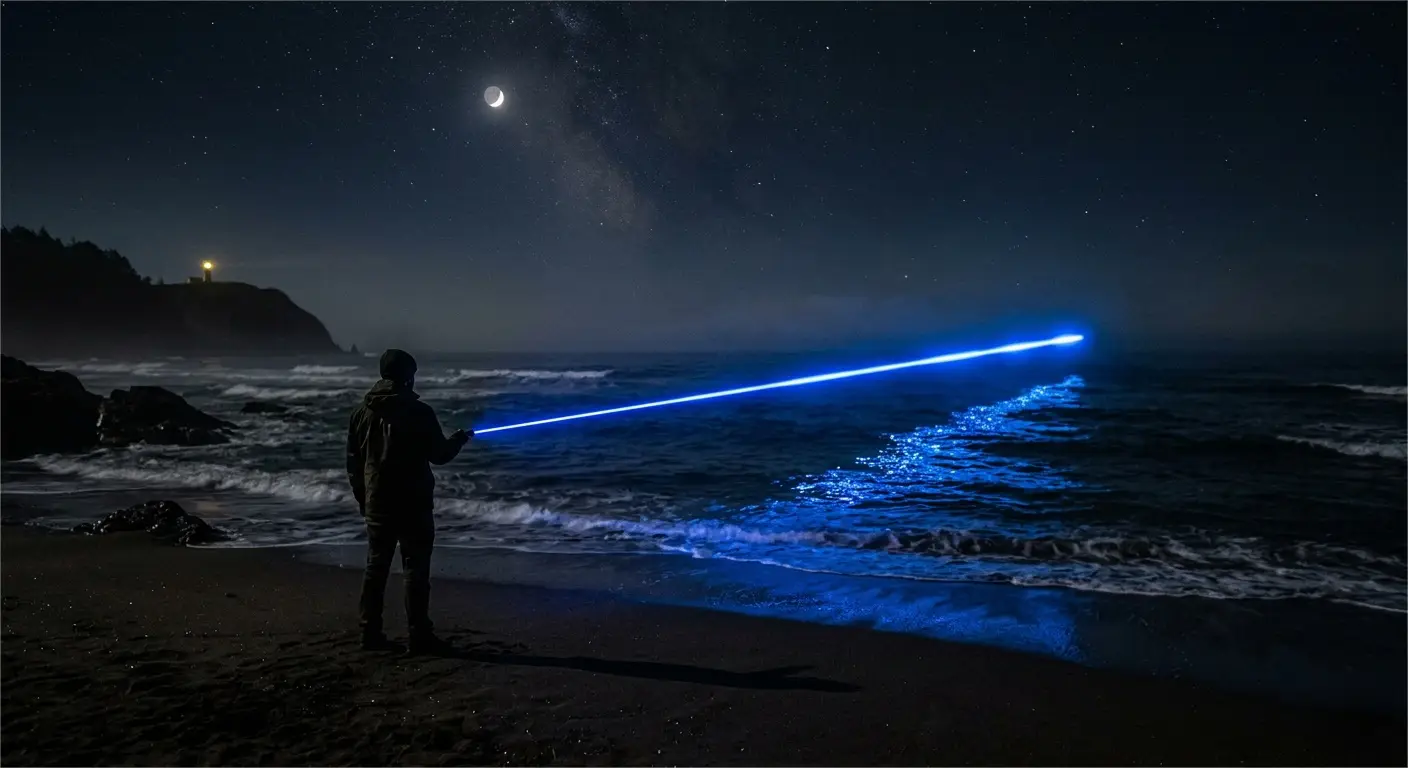
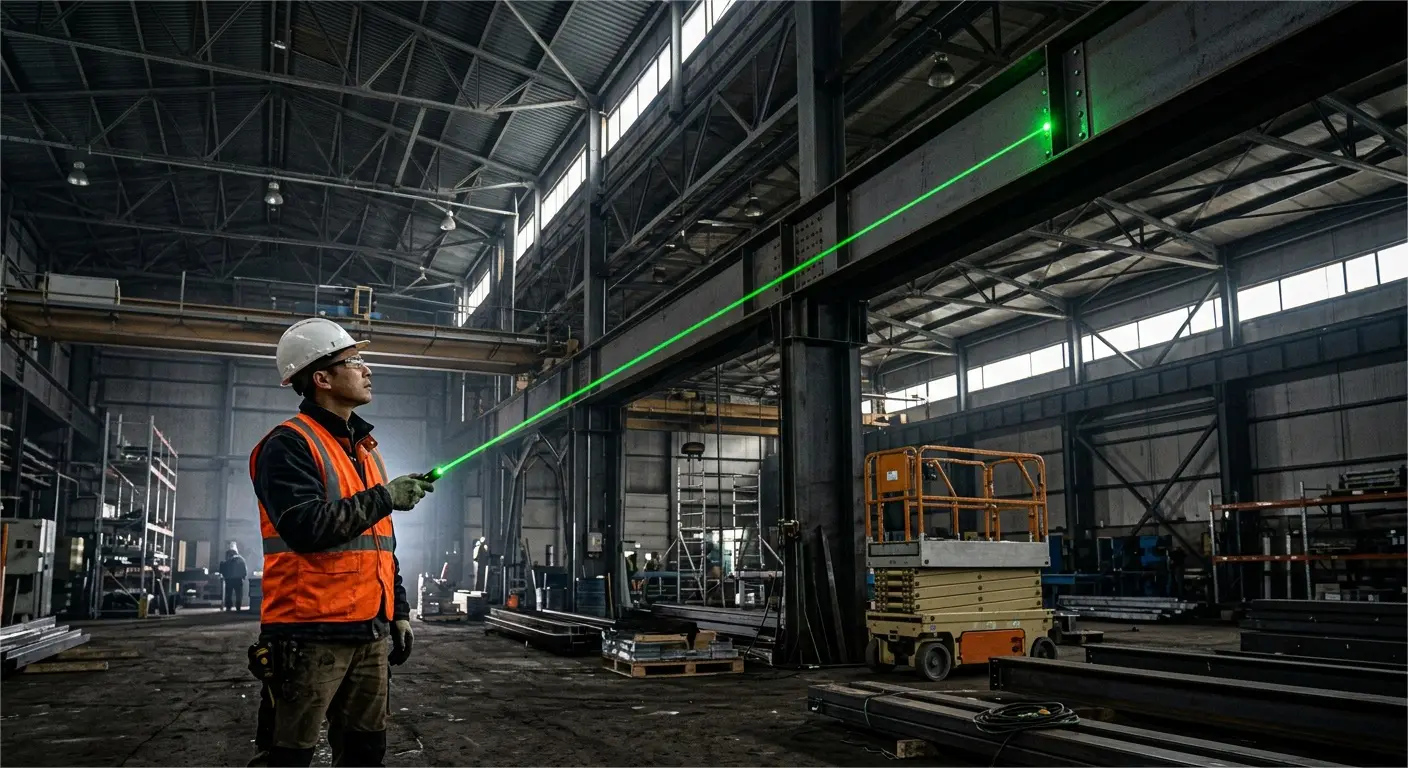
Most people walk into the laser pointer market asking the wrong question. They type "highest mW laser pointer" into a search bar, sort by number, and pick the biggest one they can afford. The sellers know this. It is why you see products labeled 50000mW on the same page as products labeled 5mW — and it is why most first-time buyers end up disappointed or worse.
The right question is not "what is the highest power I can afford." It is "what power level actually matches what I plan to do, and how do I know the number on the box is real?"
The uncomfortable starting point is that power labeling in the consumer laser market is broken at scale. NIST randomly tested 122 handheld lasers sold as presentation pointers. They found that 89.7% of green units and 44.4% of red units failed to meet federal compliance. 52.4% exceeded the legal limit by at least double. The worst unit hit 66.5mW while labeled as safe. And for the green lasers, over 75% also emitted invisible infrared radiation alongside the visible beam — energy the eye cannot detect but the retina absorbs without triggering a blink reflex. This was not a few bad apples. This was a systematic disconnect between what sellers print on boxes and what actually comes out of the aperture.
This guide exists because the mW number alone tells you almost nothing useful. If you are starting from zero and need to understand what milliwatts actually measure before diving into power selection, read our laser pointer power guide: what mW means and why it matters first, then come back here. The same "100mW" on two different products can mean one device that holds a clean, stable beam for an entire session and another that spikes briefly on a fresh battery and fades to uselessness within thirty seconds. By the end, you will know which power tier matches your goal, why the cheapest option is often the most expensive mistake, and how to read between the lines of a product listing.
The Problem With mW: Why the Number on the Box Is the First Lie
Before you can choose the right power, you have to accept that a large percentage of mW numbers printed on consumer lasers are fiction.
NIST's 2013 random-sample test of 122 handheld lasers produced results that should have reset the market. Nearly 90% of green lasers failed. Over half exceeded the legal limit by at least 2×. Some units emitted 66.5mW while labeled as safe — more than ten times the legal ceiling for a consumer pointer. And for green DPSS lasers specifically, over 75% also leaked invisible infrared alongside the visible beam.
The community testing record tells the same story in different language. Laser Pointer Forums users have spent years metering budget units and reporting back. The consensus on the ubiquitous "301" and "303" style green lasers is remarkably consistent: regardless of what the listing says — 5mW, 5000mW, or 50000mW — the real green output from these units typically falls in the 50–150mW range, often with an additional 50mW of unfiltered infrared riding along invisibly. One LPF user documented an AliExpress seller listing a standard 301 green laser as "50000mW" alongside photoshopped imagery and tactical military branding. Another thread identified a seller repackaging a roughly three-dollar 301 module into tactical branding and selling it for $56.
The playbook is consistent. Take a commodity laser module that costs a few dollars. Print an absurd power number on the listing. Add aggressive branding and fake scenario photos. Pocket the markup.
The practical consequence for you as a buyer: when comparing mW numbers across products, you are often comparing fiction to fiction. The question is not which number is higher. It is which source can actually verify what they are selling.
The Five Power Tiers: What Each One Actually Does
Once you accept that the printed number is the starting point rather than the conclusion, the next step is understanding what real output at each tier can and cannot deliver. These are not marketing categories — they are defined by the physics of what happens at the target.
≤5mW (Class 2 / 3R): Presentation and Basic Pointing
This is the legal ceiling for a consumer laser pointer in the United States. A genuine ≤5mW laser relies on the human blink reflex — approximately 0.25 seconds — as the primary safety mechanism against accidental exposure.
What you can do: Produce a clearly visible dot indoors for presentations and whiteboard work. Create a visible beam column at night under dark-sky conditions, especially in green. Serve as a cat toy at close range. Provide sufficient brightness for astronomical pointing at star parties — Cloudy Nights consistently reports that a genuine 5mW green laser is more than adequate for stargazing.
What you cannot do: Produce a visible beam in daylight or bright indoor environments. Generate meaningful thermal interaction. Maintain consistent brightness as batteries deplete in resistor-limited designs.
The hidden problem at this tier is that the "5mW" label is the most commonly faked number in the industry. A unit sold as 5mW that actually outputs 50mW is not a bargain — it is a safety hazard that bypasses your expectation of protection.
5–100mW (Class 3B Low Range): Entry-Level Outdoor
At these power levels, a green laser's beam column becomes clearly visible at night without fog or smoke, and the dot remains visible outdoors in shaded conditions. This is the tier where the laser starts to feel like more than a presentation tool. Community testing on Laser Pointer Forums suggests that 532nm green produces a clearly visible night beam at around 30mW, while 445nm blue needs roughly 100mW to achieve the same subjective visibility.
What you can do: Produce a visible night beam, especially in green. Create a usable dot in daylight shade. Begin to show thermal effects on very dark materials when focused precisely at close range.
What you cannot do: Produce a visible beam in full daylight — that requires hundreds of milliwatts or more for green, and substantially more for blue. Maintain stable high output without proper thermal design. Perform meaningful thermal work on light-colored or reflective surfaces, which bounce back most of the energy regardless of total power.
This is also the tier most heavily infested with mislabeled products. The "301" and "303" style lasers that dominate online marketplaces almost all claim power in this range, and almost all either significantly exceed or fall short of their claims, with substantial unit-to-unit variation.
100mW–1W (Class 3B High Range): Serious Hobbyist
This is where the experience changes qualitatively. A green laser in this range produces a beam column visible even under suburban light pollution. A blue laser in this range begins to deliver real thermal capability with proper focusing. The power density at the target — not the total mW — becomes the dominant variable.
What you can do: Produce a clearly visible night beam in both green and blue. Generate significant thermal interaction on dark materials — reliable at several hundred milliwatts with proper focus. Serve as a practical outdoor tool for signaling across moderate distances.
What you cannot do: Deliver consistent performance without quality thermal management. Cheap units in this tier typically lose 30–50% of their output within the first 30–60 seconds as the diode junction temperature climbs. Maintain visibility in full daylight. Interact with light-colored surfaces, which reflect most of the energy regardless of total power.
The critical variable at this tier is focus quality. A 500mW laser focused to a tight, clean spot will outperform a 1W laser with a diffuse, poorly collimated beam in any task involving energy concentration at the target. Laser Pointer Forums technical discussions repeatedly emphasize this point: total power is the headline number, but power density — power per unit area — determines what actually happens.
1W–5W (Class 4): High Power Consumer
Crossing the 1W threshold enters Class 4 territory, at which point the laser is no longer regulated as a consumer pointing device and requires active safety management: wavelength-matched protective eyewear, controlled environments, and awareness of reflective surfaces in the beam path. If you are unfamiliar with how laser safety classes translate to real-world risk, start with our Class 3R vs Class 4 safety guide before shopping in this power range.
What you can do: Produce a beam column visible in partial daylight for green and at dusk for blue. Deliver reliable thermal interaction across a range of materials with proper focus. Operate at effective distances of several meters. Serve as serious outdoor signaling and field tools.
What you cannot do: Operate safely without protective eyewear. At this level, even a brief reflection from glass, polished metal, or water can cause permanent eye damage. Maintain full output without engineered thermal management — copper heatsinks, cooling grooves, and substantial thermal mass are not luxury features at this tier; they are functional requirements. Produce a beam visible in full, direct sunlight — that generally requires 5W+ for green and significantly more for blue, depending on atmospheric conditions.
This is the tier where build quality stops being about aesthetics and starts being about physics. A $30 laser that claims 2W and a $120 laser that delivers 1.2W with proper thermal design will diverge dramatically after 30 seconds of continuous use. The cheap unit's output collapses as the diode overheats. The engineered unit maintains consistency. The higher advertised number loses to the lower real number because sustained output is what the user actually experiences.
5W+ (Class 4 High Range): Extreme and Professional
At 5W and above, you are no longer in consumer territory. These are tools for specific, demanding applications — long-distance outdoor signaling, sustained thermal capability in field conditions, laboratory environments, and specialized professional work. Community data on higher-end DPSS units with power meter testing shows that well-engineered systems at this level hold output within a narrow band over minutes of continuous operation, provided they are given adequate cooling between sessions.
What you can do: Deliver beam visibility in full daylight conditions. Provide effective energy interaction at extended ranges — 10 meters and beyond. Support professional applications including long-range surveying, emergency signaling, and specialized outdoor work. Push the physical limits of battery-powered handheld laser devices.
What you cannot do: Be handled casually under any circumstances. The safety protocols for Class 4 lasers above 5W are not suggestions — they are prerequisites. Protective eyewear rated for the specific wavelength and output class is mandatory. The beam path must be controlled. Reflective surfaces in the environment must be accounted for. These devices demand the same discipline as any other high-energy tool.
Why the Same mW Number Can Mean Completely Different Things
Even when the labeled power on two lasers happens to be accurate, their real-world performance can diverge dramatically. Four factors explain why — and understanding them is the difference between a satisfying purchase and a frustrating one.
Wavelength Determines Perceived Brightness
According to the CIE photopic luminosity function, at 450nm blue the relative luminous efficiency is approximately 0.038. At 532nm green, it is approximately 0.880. A green laser thus appears roughly 23 times brighter than a blue laser at the same output power under daylight vision conditions. In practice, this is why a device like the B020 series — which offers the same platform in both 2W green and up to 8W blue — can serve completely different use cases depending on which color you choose, even when the total milliwatts seem to point in one direction.
At night, the scotopic peak shifts toward 507nm, further amplifying green's visibility advantage. This is why a 50mW green laser can produce a clearly visible beam column at night while a 200mW blue laser may still appear dim. The eye is the limiting factor, not the laser. Community observers on Laser Pointer Forums have noted that a 1.1W blue laser subjectively appears about as bright as 250–300mW of green at night — a roughly 4× perceived difference, not the 23× of the photopic model, because beam visibility in air adds scattering effects that partially compensate.
Focus Determines Energy Density
Total power in milliwatts measures how much energy leaves the aperture. Power density — power per unit area at the target — determines what that energy actually does. A tightly focused 500mW beam concentrates the output into a spot small enough to initiate thermal interaction on dark materials. The same 500mW in a wide, unfocused beam spreads the energy thin and accomplishes nothing beyond visibility. A poorly focused 2W laser can be functionally outperformed by a well-focused 500mW laser in any task involving energy concentration at the target.
Thermal Design Determines Sustained Output
All high-power lasers heat up during use. What separates a reliable tool from a frustrating one is what happens when they do. Cheap units with minimal heat sinking can lose 30–50% of their output within the first 30–60 seconds as the diode junction temperature climbs. Community testing on Laser Pointer Forums documented a cheap 532nm DPSS module that lost visible output within a fraction of a second after power-on, recovering only after cooling — a classic sign of thermal drift in an inadequately engineered device.
By contrast, a well-designed 520nm direct diode laser with proper thermal management was documented running continuously for over 38 minutes at close to a watt of sustained output, with the body temperature reaching nearly 60°C but the output remaining consistent. The host material matters: copper's thermal conductivity of approximately 397 W/m·K moves heat away from the diode roughly 26 times faster than stainless steel's 15 W/m·K. This is the engineering rationale behind a solid copper body laser like the B008 — the entire housing functions as a single continuous heatsink, maintaining stable output over extended sessions where an equivalent aluminum host would already be showing thermal sag. Engineered cooling features — machined grooves, multi-layer heatsinks, adequate thermal mass — are not cosmetic. They are the difference between a laser that performs for three seconds and one that performs for thirty minutes. This is also why 520nm direct diode lasers tend to be more thermally stable than 532nm DPSS systems — the simpler direct-emission architecture generates less waste heat and requires fewer temperature-sensitive components.
The Driver Circuit Determines Consistency Across Battery Life
A constant current driver actively regulates the power delivered to the diode regardless of battery voltage. As a lithium cell depletes from 4.2V to 3.6V, a properly driven laser maintains the same output until the voltage falls below the driver's dropout threshold, at which point it shuts off cleanly.
A resistor-limited design — common in the cheapest units — has no regulation at all. Output tracks battery voltage directly: full brightness on a fresh charge, steady decline as the battery drains, and unpredictable spikes if a higher-voltage battery is substituted. The same laser can feel completely different at the beginning and end of a single battery cycle. Wavelength Electronics describes the distinction clearly: a constant current driver actively locks the diode current at a set value, while a bare resistor simply limits current passively and lets it drift with voltage.
What Different Budgets Actually Buy You
Understanding what each price level genuinely delivers — and what it does not — prevents the most common purchasing mistake: expecting premium performance from a commodity price point.
Under $30. You are buying a basic laser module in a generic housing. The diode is unbranded. The driver circuit, if present at all, is likely a simple resistor. Power labeling is unreliable — the "5mW" or "50000mW" on the listing is best ignored entirely. What you get is a functional laser that turns on and produces a beam, often bright enough to be genuinely impressive in a dark room. What you do not get: consistency between units, stability over a session, verified power output, infrared filtering for DPSS green units, reliable safety labeling, or any expectation that the device will last beyond casual occasional use. Laser Pointer Forums users have documented these units being manufactured for as little as a few dollars and resold under countless brand names.
$50–150. This is the first tier where you can reasonably expect a real product rather than a lottery ticket. Manufacturers at this level begin using traceable diodes, proper driver circuits, and aluminum or stainless steel hosts with functional heat management. Power ratings become more meaningful — though still worth verifying from independent sources. For example, a 1.2W entry-level blue laser with a proper aluminum host at this price point will deliver consistent, honest output that a "$30 50000mW" unit cannot sustain past its first thirty seconds.
$150–300. You are now paying for engineering, not just components. The diode is likely from a named manufacturer — Nichia or OSRAM. The driver is a proper constant current design. The host material is chosen for thermal performance rather than just appearance. Safety features like key locks and quality protective eyewear are included instead of being optional upsells. A unit like the B023 — built around a genuine Nichia diode with an integrated USB-C charging port, OD4+ rated goggles, and a mechanical safety key lock — is a representative example of what this price tier actually delivers. The power output is what the listing claims, and it stays there across the battery cycle. At this level, a laser transitions from a hobby item to a professional-grade tool.
$300+. This tier delivers capability that lower price points physically cannot match. Sustained output above 5W requires multi-cell battery platforms, precision thermal management, and optical systems with low-divergence collimation. A Nichia NDG7475 green laser diode alone can retail for $80–200 before it is mounted in a host, driven, and collimated — more than the entire retail price of a budget laser. The cost at this tier is not branding. It is the cumulative hardware cost of components that deliver verified, stable, high-power output.
Across every tier, the single most reliable indicator of quality is not the mW number or the price tag — it is whether the seller provides real test data, names the diode manufacturer, and describes the thermal and driver design rather than hiding behind a single inflated specification.
Your Use Case → Your Power Level
If you have read this far, you have probably already identified where you land. This table consolidates everything into a practical decision reference.
| What You Want to Do | Realistic Power | Best Color | Why |
|---|---|---|---|
| Indoor presentations | ≤5mW | Red or Green | High contrast dot indoors; legally compliant |
| Astronomy (solo) | 1–5mW | Green | Beam column visible at night; 5mW is more than enough |
| Astronomy (group events) | 5–20mW | Green | Slightly brighter for groups in light-polluted areas |
| Night beam visibility (casual) | 30–100mW | Green | Green beam column clearly visible around 30mW under dark sky; blue needs roughly 100mW for same subjective visibility |
| Daylight dot visibility | 50–200mW | Green | Dot visible in daylight shade; full-sun beam visibility demands far more power |
| Light thermal interaction | 500mW–1W | Blue | Blue's higher photon energy and better material absorption gives it the edge at this tier |
| Meaningful thermal interaction | 1W–5W | Blue | Reliable energy response on dark materials with proper focus; protective eyewear required |
| Long-range outdoor signaling | 5W+ | Blue or Green | Beam visible at extended distances under partial daylight |
| Extreme / professional / collection | 10W+ | Blue or Green | Laboratory-grade capability; full safety protocol mandatory |
Two principles apply across every row. First, a genuine 5mW green laser serves astronomy better than a mislabeled "50000mW" unit that actually outputs 80mW of green plus 50mW of invisible infrared. Accuracy beats a bigger number. Second, power is only one variable. Focus, stability, and safety infrastructure often matter more than raw output in real-world use.
FAQ
Why does my "50000mW" laser struggle with basic thermal tasks while a 1W laser works reliably?
Because your "50000mW" laser is almost certainly not outputting anything close to that number. Community testing consistently finds that lasers marketed with these exaggerated figures are standard 301/303-style modules outputting 50–150mW of green light, often accompanied by unfiltered infrared leakage. The 1W laser works because its rating is genuine, its focus is adjustable, and the actual energy density at the target is sufficient for the task.
How much power do I actually need for stargazing?
Less than most sellers want you to believe. A genuine 5mW green laser provides a clearly visible beam column under dark-sky conditions and is the recommended ceiling for public astronomy events across Cloudy Nights, Reddit /r/Astronomy, and professional astronomy organizations. If you are buying from a source where you cannot verify output, assume the real power may be higher than labeled and choose conservatively.
Why does a 50mW green laser look brighter than a 200mW blue laser?
Because the human eye's sensitivity to green light near 532nm is approximately 23 times higher than its sensitivity to blue light near 450nm under daylight vision conditions. The blue laser delivers more total energy to the target. The green laser delivers more of that energy in a form your visual system registers as brightness. Brightness and power are correlated but not equivalent — comparing mW numbers across colors without accounting for wavelength is misleading.
Are lasers above 1W safe to use?
They are safe when used with the appropriate precautions — which are different from those for lower-power lasers. A Class 4 laser above 1W requires wavelength-matched protective eyewear, awareness of reflective surfaces, and a controlled beam path. The device itself is not inherently unsafe. Operating it without the correct safety infrastructure is. Quality manufacturers include rated eyewear with the device for this reason.
Why does the same mW cost $30 from one seller and $150 from another?
Because the components that make a laser reliable have real manufacturing costs that exceed the entire retail price of the cheapest units. A branded diode from Nichia or OSRAM. A constant current driver circuit rather than a resistor. A copper or engineered aluminum thermal path. Precision collimation optics. These are physical objects with material and machining costs. The $30 laser and the $150 laser may produce beams of similar initial brightness. After 30 seconds, one has faded and the other has not. That gap is engineering, not profit margin.
Conclusion
Choosing the right laser power is not about finding the highest number you can afford. It is about matching real, sustained output to your actual use case and buying from a source where the number on the product means something.
For astronomy and casual pointing, a genuine low-power green laser is already more than enough. For outdoor visibility and thermal exploration, the 1W threshold opens capabilities that lower power physically cannot touch — but demands quality thermal design and proper focus. For those who want the convenience of USB charging without managing removable batteries, a built-in battery laser eliminates the charger-and-spares ecosystem while delivering honest 1.2W output — practical power in a practical package. For professional and extreme applications, power above 5W exists for a reason, and that reason is not casual use.
Across every tier, the rule stays the same: a lower power number from an honest manufacturer will outperform a higher power number from a dishonest one every time. Because the number that matters is the one that actually comes out of the aperture — not the one that fits in the product title.