
Best Laser Pointer Under $300 (2026): Real Performance, No Fake Specs
A buyer's guide to the $150-$300 laser pointer sweet spot. Compare the B023 (7W blue at $259-$299 or 2.4W green at $279-$319), B025 520nm green at $229-$269, and B022 Nichia 4W at $159-$199 — with verified specs, battery platform breakdowns, and what actually changes at each price jump.
Image Gallery
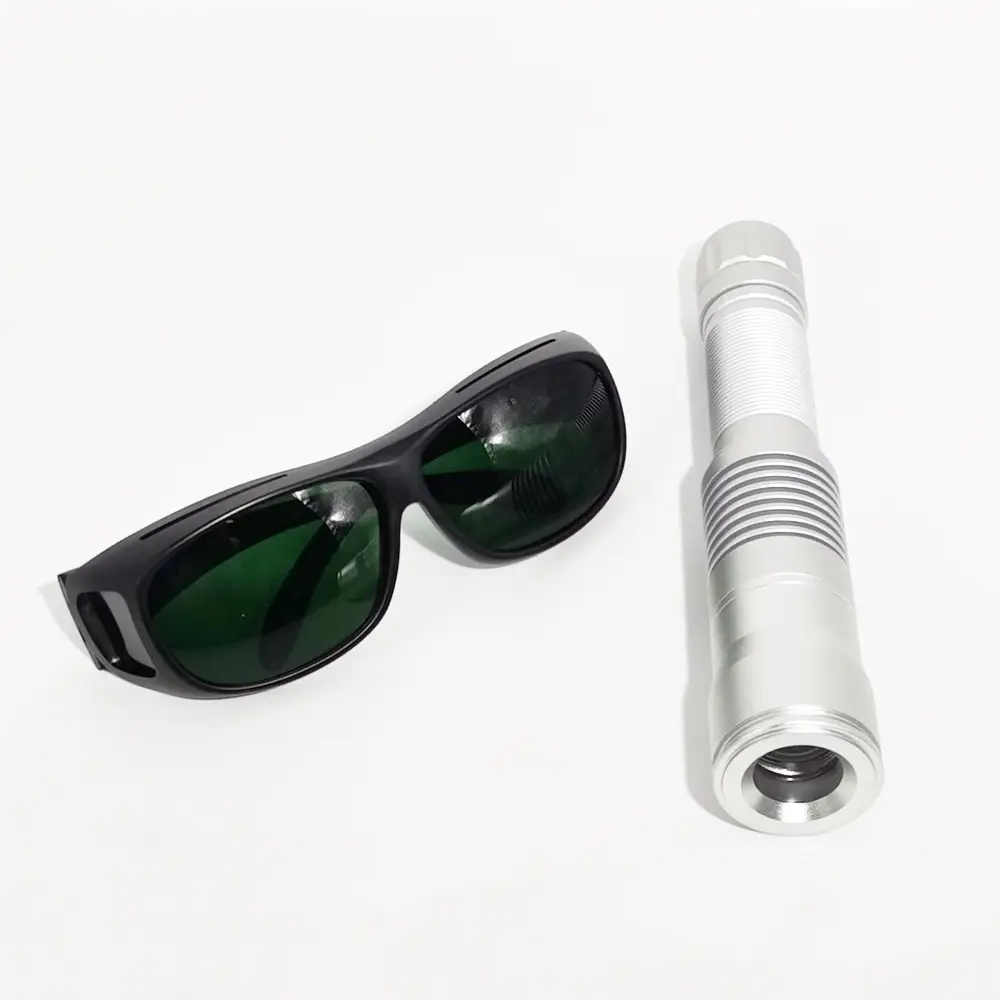
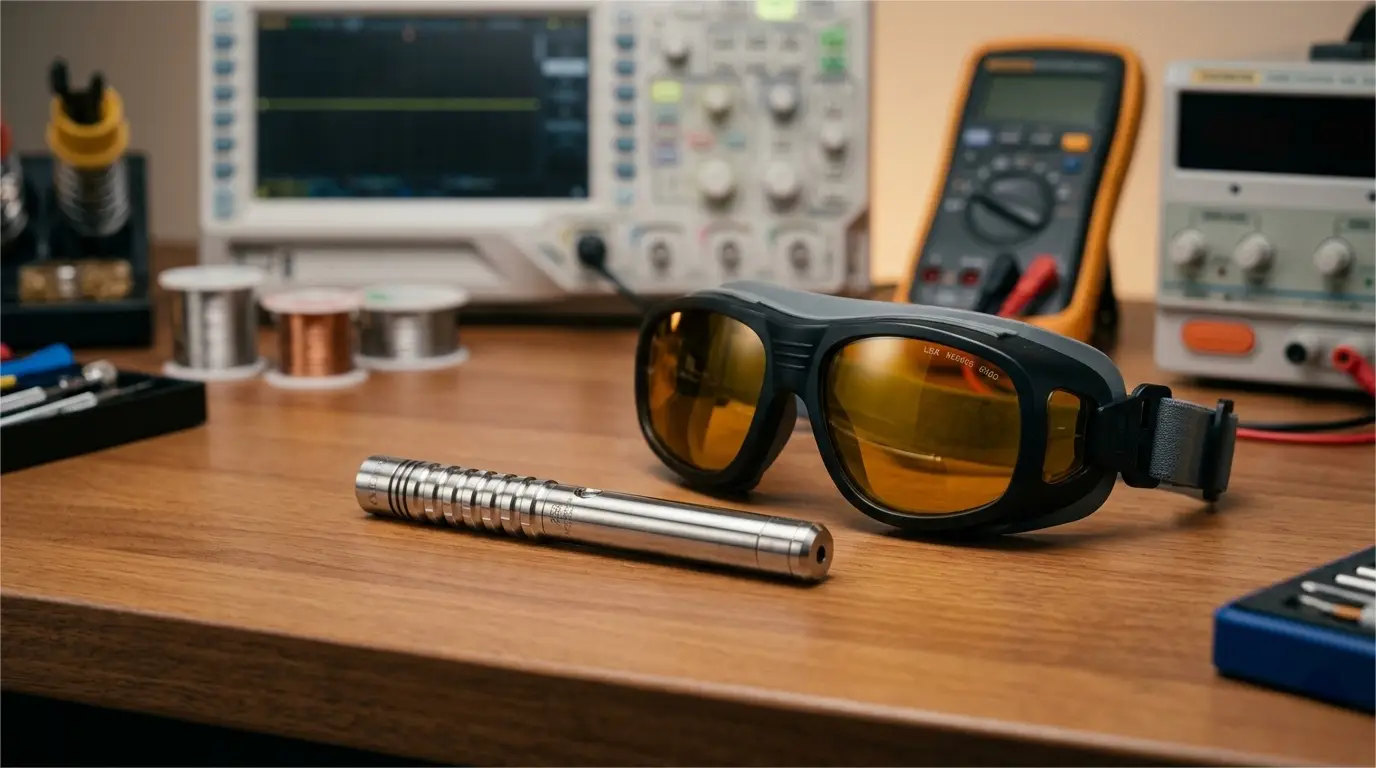
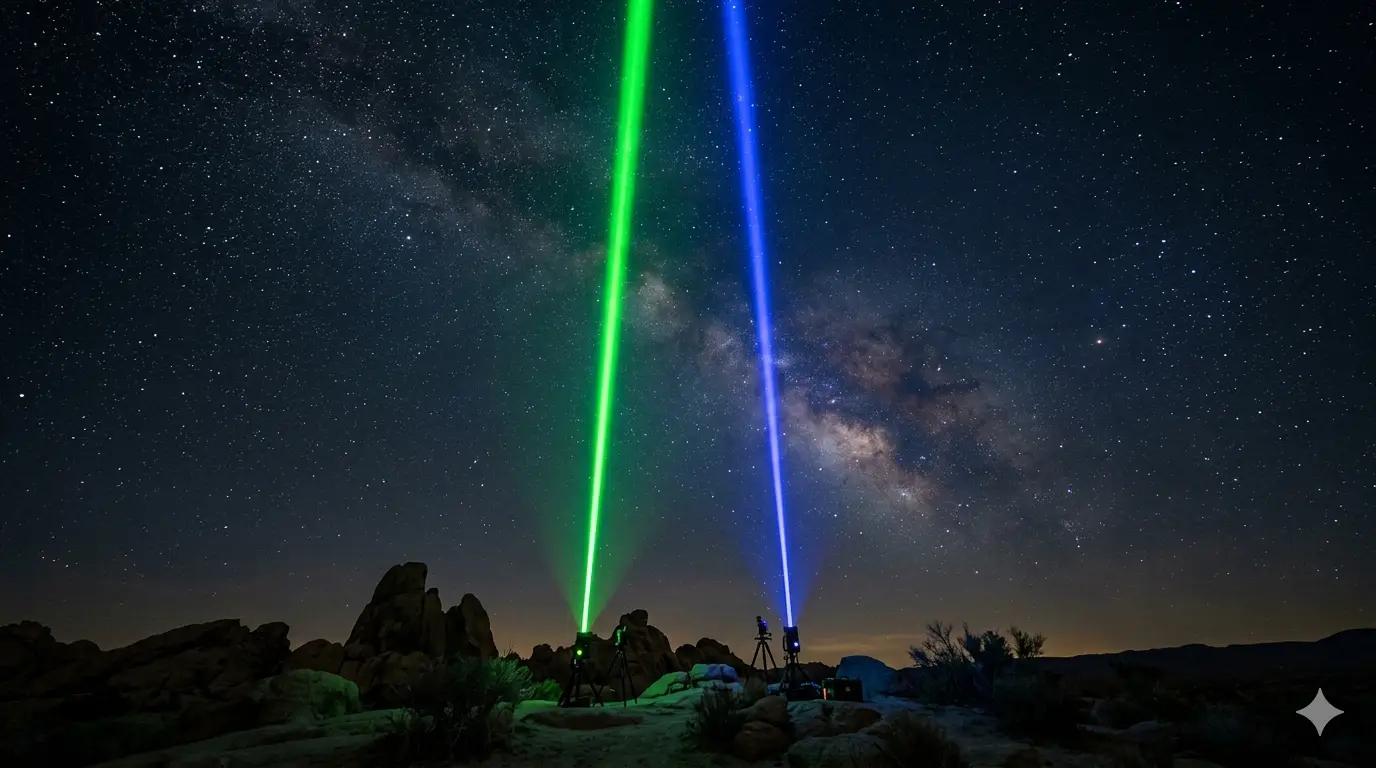
The best laser pointers under $300 are the B023 (available as 7W blue at $259-$299 or 2.4W green at $279-$319, best overall power), the B025 (1.5W 520nm green at $229-$269, best visible beam), and the B022 (Nichia 4W blue at $159-$199, best beam stability). This price range is where you stop gambling on specs and start buying tools: real diode pedigrees, proper battery platforms, and build quality that lasts years instead of months.
Most buyers shopping in the $150-$300 range are making one of two mistakes. Either they chase the highest mW number without understanding wavelength, or they assume anything over $150 is overkill and stick to the $50-$100 tier where lasers routinely fail federal safety standards. Both mistakes cost more in the long run than the price difference between a decent laser and the right one.
A $50 laser gives you a beam. A $89 laser gives you a recognizable brand. But a $159-$319 laser gives you thermal stability that keeps the beam consistent after 60 seconds, a battery platform that doesn't sag halfway through your session, and a host material that pulls heat away from the diode instead of trapping it. By the end of this guide, you will know exactly which laser fits your use case, and which spec sheet numbers to ignore.
Key Takeaways
- The B023 platform is the best overall value: pick the B023A (7W blue, $259-$299) for thermal work or the B023B (2.4W green, $279-$319) for maximum visible beam, both built on the same compact φ30×190mm stainless steel 21700 platform with USB-C charging
- The B025 at $229-$269 delivers 1.2-1.5W of 520nm direct-diode green in a pocketable φ24×145mm stainless steel body, approximately 8× brighter perceived visibility than equivalent blue mW
- The B022 at $159-$199 uses a genuine Nichia diode with 3.5-4W sustained blue output in a φ35×280mm stainless steel chassis, the best thermal endurance in this price bracket
- Green lasers cost more because the diodes cost more: a 520nm direct-diode chip requires higher indium content and tighter process control than a 450nm blue diode, which is physics, not marketing
- 74% of handheld lasers tested by NIST failed federal safety limits; in this budget range you can afford real compliance instead of eBay gambling
Quick Specs: B022, Nichia Precision Blue Laser 4W
- Wavelength: 450nm blue (Nichia NDB4916 diode)
- Output Power: 4000mW (3.5–4W sustained)
- Build Material: Stainless steel
- Battery Platform: 2 × 18650
- Dimensions: φ35 × 280mm
- Effective Range: 3–5 meters (thermal interaction)
- Price: $159-$199
- Key Differentiator: genuine Nichia diode with stainless steel thermal mass, most stable sustained beam output in this price tier
Quick Specs: B025, Compact Green Laser 1.5W 520nm
- Wavelength: 520nm green (direct diode, zero IR leakage)
- Output Power: 1500mW (1.2–1.5W)
- Build Material: Stainless steel
- Battery Platform: 1 × 18650 with USB charging
- Dimensions: φ24 × 145mm, pocket-sized
- Beam Visibility: approximately 8× brighter perceived visibility than equivalent blue mW
- Price: $229-$269
- Key Differentiator: maximum green beam visibility in a pocketable stainless steel form factor
Quick Specs: B023, Single Beam 7W Blue / 2.4W Green
- Wavelength: 450nm blue (B023A) or 520nm green (B023B), choose one variant
- Output Power: 7000mW blue (effective to 30m) / 2400mW green (effective to 15m, 8× eye sensitivity advantage)
- Build Material: Stainless steel
- Battery Platform: 1 × 21700 with USB-C charging
- Dimensions: φ30 × 190mm
- Price: $259-$299 (B023A blue) / $279-$319 (B023B green)
- Key Differentiator: highest power in the lineup on the most modern battery platform, pick your wavelength
What $150-$300 Actually Gets You (vs Under $150)
There is a line in the laser hobby where you stop saying "I hope this works" and start saying "I know what this does." That line sits around $150.
Below $150, you are mostly getting compact hosts with 18350 or 16340 batteries, basic aluminum bodies, and laser diodes that may or may not match their advertised specs. These are not bad lasers. The best laser pointer under $150 can be genuinely good. But you are buying within constraints: shorter duty cycles, fewer battery options, and limited thermal headroom.
Above $150, three things change:
You get a real battery platform. Instead of a pair of 16340s or a single 18350, you start seeing 18650, 21700, and 26650 cells. A 21700 like the one in the B023 does not just last longer: it delivers stable current under high drain, which means consistent beam output from first second to last. That matters when you are outside at night and do not want your beam dimming after two minutes.
The host becomes a heat sink, not just a shell. Stainless steel bodies with thicker walls and longer form factors pull heat away from the diode efficiently. The B023's stainless steel build is not an aesthetic choice: steel's higher density gives it more thermal mass per unit volume than aluminum, absorbing more heat before the temperature rises and buying you longer continuous runtime before the beam degrades.
Accessories become standard, not optional. At this price, you should expect protective goggles, a charging solution, and a carrying case in the box. If a $200+ laser ships without proper eye protection, that is a red flag: the manufacturer either does not understand Class 4 safety, or does not care.
When a user on Reddit's r/Astronomy bought a cheap 532nm green laser from Amazon, the label said <100mW when it arrived instead of the advertised <5mW. He returned it and said he would "save up and get a high quality laser that will last." That is the upgrade path $150-$300 exists to serve.
Blue vs Green at This Price Point: Stop Guessing
If you take one thing from this guide, make it this: blue and green are not aesthetic choices. They are functional ones.
A 450nm blue laser at 7W will burn through black plastic, light matches, and pop balloons with ease. The 450nm wavelength delivers more of its energy as heat on dark surfaces. This is why the best laser pointer for burning is almost always blue.
A 520nm green laser at 1.5W will not burn nearly as aggressively, but its beam will look dramatically brighter to the human eye. The photopic response curve, your eye's sensitivity by wavelength, peaks at 555nm (green). At 520nm, you are in the sweet spot. A 1.5W green beam can look subjectively brighter than a 7W blue beam, especially at night. The B025's spec sheet confirms this: 1.2-1.5W of 520nm green delivers approximately 8× the perceived brightness of equivalent blue output.
Here is a decision table that cuts through the confusion:
| Your Use Case | Choose | Why |
|---|---|---|
| Burning, cutting, thermal experiments | 450nm Blue | Higher raw power per dollar; dark material absorption |
| Stargazing, beam visibility, pointing | 520nm Green | Dramatically more visible per mW; no IR leakage (direct diode) |
| Outdoor daytime signaling | 520nm Green | Visible beam in daylight requires maximum eye sensitivity |
| Burning or visible beam on the best platform | B023 | B023A for 7W blue thermal, B023B for 2.4W green visibility |
| Pocket carry, EDC | Compact blue or green | Prioritize portability: B016 (6W blue, 24×105mm) or B025 (1.5W green, 24×145mm) |
Here is the part that surprises most buyers: green lasers cost more because the diodes cost more. A 520nm direct-diode green laser chip requires higher indium content in the semiconductor layers and tighter process control than a 450nm blue diode to hit the longer wavelength with acceptable efficiency. This is not a marketing markup. At the upper end, a high-power green diode alone can cost more than an entire budget blue laser, which is why products like the G019 and B020 green variants cross the $300 line.
$150-$200 vs $200-$300: What Changes?
This is the question the current search results completely fail to answer, and it is the most important one for your buying decision.
In the $150-$200 range, you are getting single-wavelength lasers built for a specific purpose. The B022 at $159-$199 gives you a genuine Nichia diode with 3.5-4W of clean 450nm blue output in a full-size φ35×280mm stainless steel host with dual 18650 batteries: built for sustained beam quality and runtime, not pocket carry. The B025 at $229-$269 delivers 1.2-1.5W of 520nm green in a genuinely compact φ24×145mm stainless steel body with a single 18650: the carry-anywhere green beam option. These are purpose-built tools: the B022 for beam purity and thermal endurance, the B025 for visible beam in a portable package.
Crossing $200 changes what you get in a single platform. The B023 is the clearest example. At φ30×190mm with a single 21700 battery and USB-C charging, it packs more power into a smaller chassis than the B022. You choose the B023A (7W blue 450nm at $259-$299, effective to 30 meters) for maximum thermal output, or the B023B (2.4W green 520nm at $279-$319, 8× eye sensitivity advantage) for maximum visible beam. The green variant costs $30 more because 520nm direct-diode chips are more expensive to manufacture, which is consistent across the entire laser market. Either way, you get the same compact stainless steel platform with the best battery technology in this price range: a single 21700 cell that delivers higher sustained current than dual 18650s, with USB-C charging built in.
Here is what the transition looks like in practice:
| Feature | $150-$200 (B022, B025) | $200-$300 (B023) |
|---|---|---|
| Battery | 2 × 18650 / 1 × 18650 | 1 × 21700 (USB-C) |
| Host type | Full-size 280mm (B022) / Compact 145mm (B025) | Mid-size 190mm, modern 21700 + USB-C |
| Wavelength options | Single (blue or green) | Single, but choose blue or green variant |
| Max blue power | 4W (Nichia, sustained) | 7W |
| Max green power | 1.5W | 2.4W |
| Best for | Single purpose, optimized | Power + versatility in one device |
Mike, a laser forum regular who owns both a B022 and a B023, put it this way: his B025 is the one he grabs for stargazing meetups because it slips into a jacket pocket and produces a visible green beam that needs no explanation. His B022 stays on his workbench: the dual 18650 platform and 280mm stainless body are overkill for a quick outing, but exactly right when he wants 30 minutes of uninterrupted runtime for beam alignment work. Different tools for different rhythms.
520nm vs 532nm: The Green Laser Safety Gap
If you buy one green laser in this price range, make it a 520nm, not a 532nm. Here is why:
532nm green lasers use DPSS (Diode-Pumped Solid State) technology. An 808nm infrared pump diode fires into a crystal set that doubles the frequency to produce 532nm green. When the crystal alignment is off, which is common in cheap units, invisible infrared light leaks out alongside the green beam. NIST researchers tested a laser labeled "10mW" and found it was emitting nearly 20mW of invisible 808nm IR: enough to cause retinal damage before you even realize anything is wrong.
520nm green lasers are direct diode. A semiconductor chip emits 520nm light directly, just like a blue laser diode emits 450nm. There is no IR pump, no crystal alignment, and no infrared leakage. The Laser Pointer Forums community states it clearly: "If your lasers are 520nm green they do not produce any IR."
In the $150-$300 budget, you can afford 520nm. Do not settle for 532nm.
Best Laser Pointers Under $300 Compared
These four models represent the best options in this price range, each optimized for a different priority. All specs come from live product data as of May 2026.
| Model | Price | Wavelength | Max Power | Battery | Body | Dimensions | Best For |
|---|---|---|---|---|---|---|---|
| B016 Pocket Blue | $179-$239 | 450nm blue | 6000mW | 18350 / 18650 ext | Stainless Steel | 24 × 105mm | Pocket burning power |
| B022 Nichia Blue | $159-$199 | 450nm blue | 4000mW | 2 × 18650 | Stainless Steel | 35 × 280mm | Beam stability + runtime |
| B025 Compact Green | $229-$269 | 520nm green | 1500mW | 1 × 18650 | Stainless Steel | 24 × 145mm | Visible beam + portable |
| B023 Single Beam | $259-$299 (blue) / $279-$319 (green) | 450nm blue (A) or 520nm green (B) | 7W / 2.4W | 1 × 21700 | Stainless Steel | 30 × 190mm | Max power, pick your wavelength |
Two products sit just above $300 and are worth knowing about. The G019 at $309-$349 adds a transparent beam extension tube for a unique laser sword visual effect, with 3.5-4W blue or 2W green output on a dual 26650 platform. The B020 at $309-$349 pushes to 8W blue, the highest power in the lineup. These sit above the $300 mark, but they show what the next tier unlocks. For a closer look at the G019's beam tube design, read the full review.
Decision Matrix: Which One Is Yours?
| Priority | Pick | Why |
|---|---|---|
| Maximum burning power | B023A | 7W blue at $259-$299: ~33mW per dollar |
| Best sustained beam quality | B022 | Nichia diode, 35×280mm thermal mass, 3.5-4W stable output |
| Green visibility + pocket portability | B025 | 1.5W 520nm, 24×145mm stainless steel, 8× perceived brightness |
| Highest power in smallest body | B016 | 6W blue in 24×105mm pocket form, unmatched power-to-size ratio |
| Best visible beam under $300 | B023B | 2.4W 520nm green at $279-$319, 30×190mm platform, 8× eye sensitivity |
7W vs 4W: Why More Watts Is Not Always Better
The B023A puts out 7W of 450nm blue. The B022 puts out 4W of 450nm blue. That is 75% more power on paper. But paper and eyeballs disagree.
Human eyes are not linear power meters. The photopic response curve, your retina's sensitivity by wavelength, peaks at 555nm (green) and drops off sharply on both sides. At 450nm, your eyes are operating at roughly 4% of peak sensitivity. This means a 1.5W 520nm green laser like the B025 looks dramatically brighter than both the 4W and the 7W blue, despite having far less raw output.
The Laser Pointer Forums community has documented this pattern extensively. The consensus: within the blue spectrum, the difference between 4W and 7W at the same wavelength is real but less dramatic than buyers expect. You are not getting a beam that looks 75% brighter. You are getting more thermal energy on target, which matters for burning, but for beam visibility the jump from blue to green dwarfs the jump from 4W to 7W.
Beyond perception, there is a real-world usability tradeoff. A Reddit user with an 8W blue described the reality: "This laser sucks up battery power pretty quickly." High-wattage diodes draw high current, and even a 21700 cell drains noticeably faster at 7W than at 4W. More power means more heat, shorter duty cycles, and faster battery swaps. Most users discover they did not need 7W after all: "depending on what your goals are, a 300mW laser is still very bright... and is a lot safer."
The practical takeaway: if you are buying for beam visibility (stargazing, signaling, pointing), the B025 at 520nm green will outperform both blue options despite having the lowest mW number. If you are buying for thermal work (burning, cutting, experiments), the B023A at 7W delivers the most energy on target. The B022 at 4W sits in between: enough power for most thermal tasks, with the benefit of a Nichia diode delivering cleaner, more stable output over longer sessions.
What to Look for When Buying in This Range
Battery platform matters more than you think. It determines your runtime, your host size, and your long-term ownership cost. Here is how the common options stack up:
- 18350 / 16340: Pocket-friendly. Short runtime at high power. Good for occasional use, frustrating for long sessions. Found in B016 (compact variant).
- 18650: The industry standard. Good capacity, widely available, reasonable size. Found in B022 (dual) and B025 (single).
- 21700: The high-drain sweet spot. Higher sustained current delivery than 18650. The B023 uses this for a reason: 7W demands stable current. USB-C charging built in.
- 26650: Maximum capacity and heat tolerance. Larger and heavier, but runs the longest. Found in the G019 and B020, the premium tier above $300.
Safety accessories are not optional at this power level. A Class 4 laser, which is anything over 500mW, meaning every laser in this article, demands proper eye protection. Look for goggles rated at OD 4+ for your specific wavelength. The goggles should come in the box: if a $200+ manufacturer skips eye protection, walk away.
Warranty and support become real considerations above $200. This is the price point where you are no longer treating a laser as disposable. A Sanwu user on Laser Pointer Forums had a Challenger II 488nm that went dim in its second week. Sanwu support walked him through troubleshooting, had him send back the module, repaired it, and pushed the output from 60mW to 150mW as a bonus. At $150-$300, you should expect this level of support. If a brand has no visible customer service presence, factor that into your decision.
Safety & Legal Reality
Let us not soften this: every laser recommended in this article is Class 4, the highest hazard classification. The FDA states that visible-light handheld lasers promoted as "laser pointers" must stay at or below 5mW (Class IIIa/3R). Products sold above 5mW cannot legally be marketed as "pointers" in the United States.
What does this mean for you as a buyer? Three things:
First, you are the operator of a Class 4 laser device. That means treating it like a tool, not a toy. Never point at aircraft: the FAA recorded 12,840 laser strikes in 2024, with civil penalties up to $11,000 per incident and $30,800 for multiple violations. Never look at the dot without wavelength-matched protective goggles, even from across the room. A split-second reflection off glass or metal can deliver more energy to your retina than the ANSI Z136.1 maximum permissible exposure.
Second, the industry has a compliance problem. NIST randomly tested 122 handheld lasers and found that 74% failed to meet federal safety standards. Among green lasers, 89.7% were noncompliant; 52.4% exceeded legal emission limits by more than double. This is why buying from a known brand with real specs matters. A 2025 medical case series documented 32 cases of laser pointer retinal damage, with over 40% of patients being under 18 years old. These were not industrial accidents: they were consumer laser pointers in the wrong hands.
Third, the legal landscape varies by country. Your local laws may restrict import, ownership, or use of Class 4 handheld lasers. Before ordering, verify what is legal where you live. The full country-by-country breakdown is in our laser pointer laws guide.
Conclusion
The laser pointer market under $300 is where informed buyers get the most value. Below $150, you are often gambling on specs. Above $300, you are paying for specialized features most users do not need. Between $150 and $300, you can buy a laser with a real diode pedigree, a proper battery platform, and the build quality to last years, not months.
If you want one recommendation: the B023 is the best overall laser pointer under $300. Pick the B023A for 7W blue thermal work at $259-$299, or the B023B for 2.4W green maximum visible beam at $279-$319. Either way you get the same compact φ30×190mm stainless steel 21700 platform with USB-C charging. If portability is your priority, the B025 at $229-$269 gives you a genuinely visible 520nm green beam in your pocket, and the B022 at $159-$199 delivers Nichia beam quality with the best thermal endurance in the bracket.
The difference between a $50 eBay laser and a $200 laser from a known brand is not just extra watts. It is the difference between hoping the specs are real and knowing they are.
Before: guessing which laser to buy, worried about fake specs and IR leakage. After: a clear, wavelength-matched choice with real specs and proper safety gear. Browse the full product lineup →
About the Author
LaserPointerHub Editorial Team | High-power laser specialists with hands-on experience across 450nm, 520nm, and 532nm handheld platforms.
Reviewed by: LPH Technical Staff, laser safety certified
FAQ
Is a 7W laser worth it over a 4W?
It depends on your use case. For burning and thermal work, 7W delivers more energy to the target at the same 450nm wavelength. For beam visibility, a 1.5W 520nm green like the B025 looks dramatically brighter than either the 4W or 7W blue because the human eye is far more sensitive to green wavelengths. For most users, 4W is already more than enough. A Reddit user with 8W noted that most of the time his laser just "chars stuff, not ignites it."
Is green or blue laser better?
Green (520nm) is far more visible to the human eye, making it ideal for stargazing, pointing, and outdoor signaling, about 8× brighter perceived visibility than equivalent blue mW. Blue (450nm) delivers more raw burning power per dollar. At this price range, choose green for beam visibility and blue for thermal work. The B023 platform is available in both variants: B023A (7W blue, $259-$299) for thermal work, B023B (2.4W green, $279-$319) for visibility.
Are high power laser pointers legal?
In the US, handheld lasers above 5mW cannot legally be marketed as "laser pointers." They are Class 4 laser devices and legal to own in most states, but their use is restricted: never point at aircraft, vehicles, or people. The FAA recorded 12,840 laser strikes in 2024 with civil penalties up to $11,000 per incident. Always check the laser pointer laws by country before purchasing.
Does 520nm green have IR leakage?
No. 520nm green lasers use direct-diode technology: the semiconductor chip emits green light directly, with no infrared pump diode involved. Only 532nm DPSS green lasers can leak IR, because they use an 808nm IR pump diode to generate green through crystal frequency doubling. NIST testing confirmed that a misaligned DPSS crystal in a 532nm laser can leak nearly 20mW of invisible IR. In the $150-$300 range, always choose 520nm.
What should I look for when buying a laser pointer under $300?
Prioritize four things: match wavelength to your use case, green for visibility, blue for burning; check the battery platform, 21700 or 18650 for long sessions, 18350 only if you prioritize pocket size above all else; verify the brand publishes real specs, not inflated mW claims; and ensure safety goggles rated OD 4+ for your wavelength are included in the box.
Can a laser pointer under $300 burn things?
Yes. Every laser in this article is Class 4 (above 500mW). The B023 at 7W blue can light matches, pop balloons, and burn through dark plastic and paper, with beam energy effective up to 30 meters. The B016 at 6W and B022 at 4W can also burn effectively. Green lasers at 1.5-2.4W will burn less aggressively: their energy is optimized for visibility, not thermal transfer.
How far can a laser pointer under $300 reach?
A 1.5W 520nm green laser like the B025 produces a beam visible for several kilometers at night. The beam itself technically travels until it hits something or leaves the atmosphere, but practical visibility depends on atmospheric conditions, ambient light, and wavelength. Green beams are visible at much greater distances than blue at the same power level because of the eye's dramatically higher sensitivity to green wavelengths.
What battery type is best for a high power laser?
For most users, 21700 or 18650 is the best balance. 21700, used in the B023, offers the highest capacity and best current delivery for 7W-class lasers with USB-C convenience. 18650 is the most widely available and fits more compact hosts, found in the B022 (dual) and B025 (single). Avoid lasers that use stacked coin cells or non-standard proprietary batteries: they limit your runtime and replacement options.
Are expensive laser pointers safer than cheap ones?
Not inherently: a 7W Class 4 laser is dangerous regardless of price. But expensive lasers are more likely to include proper safety goggles, accurate power labeling, and thermal protection circuits that prevent overheating. Cheap lasers often skip these, creating hidden risks. NIST found 74% of tested handheld lasers failed safety standards, with cheap units disproportionately affected.