
Best Laser Pointer Under $150 (2026): Real Performance, No Fake Specs
Compare the best laser pointers under $150 with real specs and no marketing hype. Blue vs green, what the $89-to-$159 price jump actually buys you, and how to spot fake mW claims before you waste your money.
Image Gallery
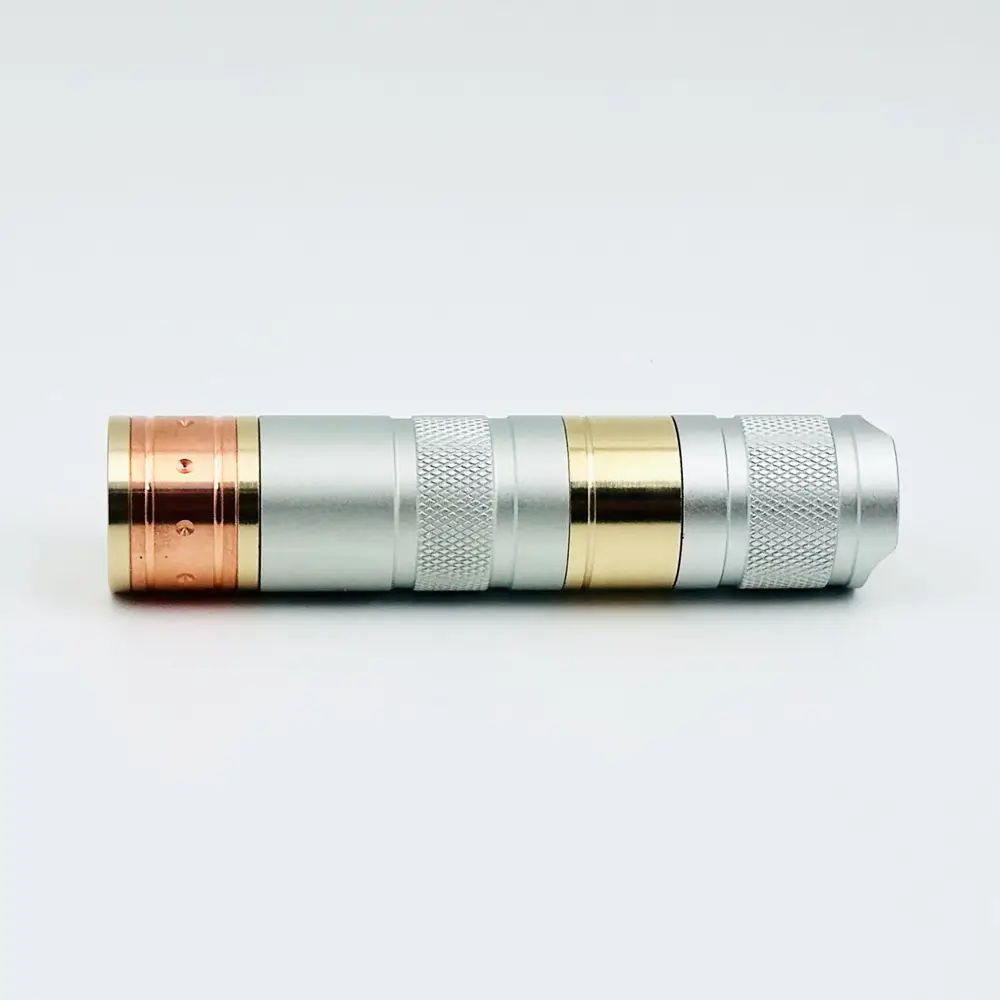
The best laser pointers under $150 are the B017 (1600mW compact blue, $79-$89), B018 (1600mW rugged blue with variable focus, $129), and B030 (520nm green, $139-$179), each built for a different use case, and none of them make fake mW claims.
Most people shopping in the $60-$150 range are asking the wrong question: "Which one has the highest mW?" That mindset is exactly what sellers of cheap, over-spec'd lasers count on. The real question is: what does that extra $40 over a $50 model actually buy you?
Here's the short version. A $50 laser gives you a beam. A $89 laser gives you a decent beam with a recognizable brand. But a $129-$179 laser gives you thermal stability that keeps the beam consistent after 60 seconds, a battery platform that doesn't sag halfway through your session, and a host material that pulls heat away from the diode instead of trapping it.
By the end of this guide, you will know exactly which laser pointer under $150 fits your use case, and which spec sheet numbers to ignore.
Key Takeaways
- The B017 delivers 1600mW of blue output in a compact body with two battery configurations (16340 compact or 18650 extended)
- The B018 offers 1600mW blue output with a rugged aluminum head, variable focus, and single 21700 battery with USB charging
- The B030's 520nm green beam looks roughly as bright as a 500mW blue beam, despite its lower mW rating
- At $150, you are paying for thermal design, battery platform, and host material, not just a bigger mW number
- The $100-$150 SERP is a content desert: no competitor has published a proper buying guide for this price tier
Quick Specs: B017, Compact Blue Laser 1600mW
- Wavelength: 450nm blue
- Output Power: 1600mW (1.6W)
- Build Material: Aluminium alloy
- Battery Platform: 2 x 16340 (B017A compact) / 2 x 18650 (B017B extended)
- Dimensions: 160mm (B017A) / 217mm (B017B)
- Projection Modes: Single beam + starry sky diffraction
- Price: $79 (B017A) / $89 (B017B)
- Key Differentiator: Two battery configurations in one series — hot-swap spare cells for zero downtime
Quick Specs: B018, Rugged Build Laser 1600mW Variable Focus
- Wavelength: 450nm blue
- Output Power: 1600mW (1.6W)
- Build Material: Aluminium alloy with aircraft-grade aluminum head
- Battery Platform: 1 x 21700 high-discharge (USB charging)
- Dimensions: Compact handheld
- Projection Modes: Single beam + starry sky diffraction with 5 copper caps
- Price: $129
- Key Differentiator: Aircraft-grade aluminum head + machined heat dissipation grooves + rotating-head variable focus
Quick Specs: B030, Elite 520nm Green Laser Flashlight
- Wavelength: 520nm green (direct diode)
- Output Power: >1mW (visible beam class)
- Build Material: 6061-T6 Aircraft-grade Aluminum
- Battery Platform: 1 x 16340 rechargeable
- Beam Range: Visible up to 2,000 meters at night
- Water Resistance: IPX5
- Price: $139-$179
- Key Differentiator: 520nm direct-diode green, approximately 8x brighter perceived visibility than equivalent blue mW
What $150 Gets You That $50 Does Not
Here is a scenario that plays out in laser forums every week.
Someone buys a $27 Laser 303 off eBay. It takes forever to warm up to full brightness. The beam flickers. The host gets uncomfortably warm after 30 seconds. Six months later, it is dead.
Frustrated, they post on Reddit: "I want something that actually works. Budget: $150."
This is the performance-tier upgrade path. And it's not about getting a bigger mW number. It's about three things budget lasers can't deliver: thermal stability, battery integrity, and build quality that survives daily use.
Take thermal stability. A compact budget laser might hit its rated output for the first 10 seconds. After 30 seconds, the diode heats up and output drops, sometimes by 20-30%. A laser with proper thermal management, like the B018's machined heat dissipation grooves and aircraft-grade aluminum head, pulls heat away from the diode continuously. The beam stays consistent.
Then there is the battery platform. Budget lasers typically use small cells, 16340 or 10440, that sag under high drain. At $150, you are looking at dual-18650 or 21700 platforms that maintain voltage under load. The difference isn't "longer runtime" on a spec sheet. It's a beam that looks the same at minute 5 as it did at second 5.
"I purchased a 303 laser off eBay and it takes forever for it to get fully bright.", Reddit user AlwaysGiveKarma, who was shopping for an upgrade into the performance tier.
The jump from $50 to $150 isn't about more features. It's about everything working the way the spec sheet promised.
Best Laser Pointers Under $150: Head-to-Head
Here is how the three best laser pointers under $150 stack up:
| Spec | B017 Compact Blue | B018 Rugged Blue | B030 Elite Green |
|---|---|---|---|
| Price | $79 (B017A) / $89 (B017B) | $129 | $139-$179 |
| Wavelength | 450nm blue | 450nm blue | 520nm green |
| Output | 1600mW (1.6W) | 1600mW (1.6W) | >1mW (visible) |
| Diode | High-power 450nm | High-power 450nm | Direct-diode 520nm |
| Material | Aluminium alloy | Aluminium alloy, aircraft-grade head | 6061-T6 Aluminum |
| Battery | 2 x 16340 / 2 x 18650 | 1 x 21700 (USB charge) | 1 x 16340 |
| Projection | Single beam + starry sky | Single beam + starry sky | Single beam |
| Best For | Portability, spare-cell hot-swap | Rugged outdoor use, variable focus | Astronomy, visibility, outdoor |
B017, Two Battery Configurations, One Price
The B017 is the entry point into genuine-performance blue lasers. 1600mW of 450nm blue output in a compact aluminium alloy body with two battery configurations: the B017A runs on 2 x 16340 cells in a 160mm body, while the B017B uses 2 x 18650 cells in a 217mm body for extended runtime.
The key advantage of the B017's removable battery design is hot-swap capability. If the cells run low, you swap in fresh ones and keep going — no waiting for a USB charge cycle. Carry one set charging and one set running, and you have effectively unlimited uptime.
Both variants deliver consistent 1.6W blue 450nm output in single beam mode, plus starry sky diffraction with five interchangeable starfield caps. The aluminium alloy body keeps weight manageable for pocket carry. Black and silver color options available on both variants.
B018, Rugged Build with Variable Focus
The B018 brings a different philosophy: build strength and optical versatility. Its aircraft-grade aluminum head is rigid enough to double as an emergency glass-breaking tool, and the machined heat dissipation grooves along the body accelerate thermal transfer to keep the diode running cooler for longer.
The standout feature is the rotating-head variable focus. Twist the head to tighten the beam into a concentrated column for distance work, or widen it for area coverage. This makes the B018 more versatile than fixed-focus lasers in the same price range.
Power comes from a single 21700 high-discharge lithium battery with USB charging — no external charger required. The textured anti-slip grip provides secure one-handed control during extended use. Five solid copper starfield caps are included for starry sky diffraction modes, and the aluminum carrying case, USB charger, and goggles come in the box.
B030, See the Beam, Not Just the Dot
The B030 is the wildcard in this lineup. Its power spec says ">1mW," which looks unimpressive next to the B017 or B018's 1600mW. But that number is misleading, and that is exactly the point this article wants to make about how laser brightness actually works.
The B030 uses a 520nm direct-diode green laser. The human eye is roughly 8 times more sensitive to 520nm green light than to 450nm blue. So a 150mW green beam can look just as bright as a 500mW blue beam to your eyes. The B030's beam is visible up to 2,000 meters at night, and the IPX5 water resistance means it handles dew, light rain, and coastal humidity without issue.
For astronomy, stargazing, outdoor signaling, and bird deterrence, the B030 is the pick. The green beam cuts through night sky better than any blue laser at this price.
Blue vs Green at $150: The Brightness Paradox
Here is a sentence that changes how people buy laser pointers:
"The 525nm 150mW unit is just as bright as the 500mW 445nm version.", Reddit user, r/lasers
This is not marketing spin. It is physics. Human eye sensitivity peaks around 555nm (green) and drops off sharply toward the blue end of the spectrum. A 520nm green laser at 150mW can produce the same perceived brightness as a 450nm blue laser at 500mW or more.
What this means for your $150 decision:
Choose 450nm blue if your priority is thermal performance, burning, popping balloons, lighting matches, or any application where raw energy transfer matters more than beam visibility. The B017 and B018 excel here.
Choose 520nm green if your priority is beam visibility, stargazing, pointing out constellations to a group, outdoor signaling, bird deterrence, or any scenario where you want people to see the beam column in the air. The B030 is the clear pick.
There is another layer to the green laser decision: 520nm direct-diode versus 532nm DPSS. Traditional green laser pointers use DPSS (Diode-Pumped Solid State) technology that pumps an 808nm infrared diode through a crystal set to produce 532nm green. These systems are temperature-sensitive, fragile when dropped, and can leak invisible infrared light if the filter is cheap or misaligned.
A 520nm direct-diode green laser, like the one in the B030, produces green light directly from the semiconductor. No crystals to misalign. No IR leakage. Cold starts are instant, and the beam is stable across a wider temperature range. For outdoor use, especially astronomy, where you might be standing in a cold field at 2 AM, 520nm direct-diode is the clear winner. We covered the DPSS vs direct-diode physics in depth in our green vs blue laser physics guide.
5 Things That Actually Justify the $60 to $179 Jump
If you are comparing a $60 laser (like the B017) with a $129-$179 option (B018 or B030), here is where the $60-$90 goes. These are not marketing points. They are physical, testable differences.
1. Thermal Stability After 60 Seconds
Every laser diode generates waste heat. As the diode heats up, its output wavelength shifts and its efficiency drops. In a budget host with minimal thermal mass, this happens fast, within 30 seconds, your "5000mW" laser might be putting out half that.
The B018's machined heat dissipation grooves and aircraft-grade aluminum head act as a thermal management system, pulling heat away from the diode continuously. The result is a beam that looks the same at minute 3 as it did at second 10. If you are burning, testing, or doing anything where consistency matters, this alone is worth the price difference.
2. Battery Platform: Not All Lithium Cells Are Equal
Budget lasers ship with 16340 or 10440 cells, small, low-capacity batteries that struggle under high current draw. When voltage sags, the driver circuit cannot maintain constant current to the diode. The beam dims.
The B017B uses dual 18650s, and the B018 uses a single 21700 high-discharge cell. These cells handle high drain without voltage sag. More importantly, they are standardized, you can buy replacement 18650 or 21700 cells from Samsung, LG, or Sony for a few dollars. Try finding a quality 10440 cell on short notice.
3. Host Material: Stainless Steel vs Aluminum Alloy
Aluminum is lighter and cheaper. Stainless steel is heavier, stronger, and has about one-third the thermal conductivity, but substantially more thermal mass. In a laser host, thermal mass matters more than conductivity for sustained output. The steel body soaks up heat and releases it slowly, acting as a buffer that smooths out temperature spikes at the diode.
The B018 uses an aircraft-grade aluminum head with machined heat dissipation grooves for active thermal management. The B017 uses an aluminium alloy body balanced for carry comfort. The B030 uses 6061-T6 aircraft-grade aluminum, lighter, better for a laser you will hold pointed at the sky for extended periods.
4. Beam Quality and Optical Design
Cheap lasers often use basic acrylic lenses that scatter light and produce rectangular or irregular beam profiles. One LPF reviewer described a typical 445nm budget laser's beam: "The dot has a rectangular shape to it, but not as bad as a 445."
At $150, you should expect a glass lens with anti-reflective coating and a cleaner beam profile. The B018's rotating-head variable focus lets you dial in the beam shape for your specific use case, from a tight concentrated column to a wider coverage pattern.
5. Brand Transparency and What Happens After You Buy
This is the factor nobody puts on a spec sheet. At the $50 tier, you are buying from anonymous Amazon storefronts or eBay sellers who may disappear next month. At the $150 tier, you are buying from a brand with a website, a support channel, and a reputation to maintain.
One Reddit user's experience with an overseas brand captures the risk: "I put an order in 2 months ago and I now have to call my credit card company and dispute the charge because they just started ignoring me." When you factor in the cost of a failed transaction, the "cheaper" option was not cheaper at all.
The mW Trap: How to Read Specs Without Getting Fooled
At every price point, including $150, you will encounter laser listings that make impossible power claims. A $40 Amazon listing promising "50000mW." A brand site advertising "10W handheld." Here is how to spot the nonsense.
The FDA regulates laser pointer manufacturers with a clear rule: visible-light handheld lasers marketed as "pointers" are limited to 5mW. Products between 5mW and 500mW fall into Class IIIb and cannot legally be promoted as pointers. Anything over 500mW is Class IV, the highest hazard classification for consumer lasers.
So when you see "10000mW laser pointer" on a product page, two things are true simultaneously: (1) the product almost certainly does not output 10,000mW, and (2) if it did, it would be illegal to sell as a "pointer."
We have covered the epidemic of fake mW claims in detail before. The short version: NIST randomly tested 122 laser pointers and found that roughly 90% of green lasers and 44% of red lasers exceeded labeled power limits, often by 2x to 10x. The same study found units labeled "5mW" that actually emitted over 100mW total output, including invisible infrared.
The $150 lesson: buy from a brand that publishes real specs, not inflated ones. A laser that honestly claims 4W is more powerful and more trustworthy than one that claims 10W and delivers 1W.
Medical literature backs up why this matters beyond performance. A case report in the New England Journal of Medicine documented severe bilateral retinal damage from a 150mW green handheld laser, and noted that devices up to 700mW were readily available online. This is not a theoretical risk. It is a documented outcome of the unregulated laser market.
Which Laser Pointer Under $150 Is Right for You?
Here is the decision framework:
You want a compact carry with hot-swappable batteries → B017 ($79-$89).
1600mW of blue output in a lightweight aluminium body. Choose the B017A (2 x 16340, 160mm compact) for pocket carry, or the B017B (2 x 18650, 217mm extended) for longer runtime with spare-cell hot-swap capability.
You want rugged build with optical versatility → B018 ($129).
Aircraft-grade aluminum head, rotating-head variable focus, machined heat dissipation grooves, and a single 21700 battery with USB charging. Best for users who need one laser that handles both tight-beam distance work and wider area coverage.
You want the brightest visible beam for astronomy or outdoor use → B030 ($139-$179).
The 520nm green wavelength is visible up to 2,000 meters at night without needing insane mW. IPX5 water resistance. Direct-diode means no cold-start problems. This is the laser you take to a stargazing field at 2 AM.
For more comparisons across price ranges, see our guides to the best laser pointers under $50, under $100, and under $200. If you need maximum power regardless of budget, our best high-power laser pointer guide covers the full range.
FAQ
Is $150 enough for a good laser pointer?
Yes. $150 is the sweet spot where you get genuine performance-tier build quality, aircraft-grade hosts, real 1.6W output, reliable battery platforms, without paying flagship prices ($200+). The B017, B018, and B030 all deliver real specs and real performance at this price.
Is a 150mW green laser brighter than a 500mW blue laser?
They can look roughly equal in perceived brightness. The human eye is about 8x more sensitive to 520nm green than to 450nm blue. This is why the B030's green beam is competitive with much higher-mW blue lasers for visibility-dependent uses like astronomy.
What should I look for in a laser pointer under $150?
Prioritize four things over the mW number: thermal design (stainless steel host, adequate mass), battery platform (18650 or 21700, not 10440/16340), optical quality (glass lens, clean beam profile), and brand transparency (published real specs, not inflated marketing numbers).
Are laser pointers over 5mW legal?
In the US, the FDA limits laser "pointers" to 5mW. Products above 5mW are Class IIIb or Class IV and cannot be legally marketed as pointers. However, high-power handheld lasers are sold as portable laser devices for specific applications. Always check local regulations and use appropriate safety glasses.
Do I need safety goggles for a $150 laser pointer?
Yes. At the power levels in this guide (1.6W blue to visible green), reflections from shiny surfaces can cause permanent eye damage faster than your blink reflex. Wavelength-matched laser safety glasses are essential. Every product recommended here includes protective goggles.
Why do some green laser pointers stop working in the cold?
DPSS green lasers (532nm) use temperature-sensitive crystals that can misalign in cold weather. Direct-diode green lasers (520nm), like the B030, do not have this problem, they produce green light directly from the semiconductor and work reliably across a wider temperature range.
Conclusion
The $60-$150 laser pointer market is the most confusing tier; not because there are too many choices, but because the real differences between a good laser and a mediocre one are invisible on an Amazon listing. You cannot see thermal stability in a product photo. You cannot feel host quality through a spec table.
The B017, B018, and B030 each solve a different problem. The B017 gives you compact blue power with hot-swappable batteries and two form factors. The B018 gives you rugged build quality with variable focus versatility. The B030 gives you the brightest visible beam for outdoor and astronomy use, with none of the cold-start headaches of older DPSS technology.
If you remember one thing from this guide, make it this: at $150, mW is the least interesting number on the page. Host material, battery platform, diode quality, and brand transparency matter more. Buy the laser built for your actual use case, not the one with the biggest number in the title.
About the Author
The Laserpointerhub editorial team tests and reviews high-power handheld lasers. Every product recommendation is based on verified specifications, hands-on evaluation, and community data from Laser Pointer Forums and r/lasers.
For questions, returns, or support: visit our contact page or return policy.