
Best Laser Pointer for Outdoor Use: Survival, Camping, Hiking & Emergency Signaling Guide
Not all laser pointers belong in your survival kit. Compare standard pointers, rescue-grade lasers, and high-power handhelds for camping, hiking, and emergency signaling.
Image Gallery
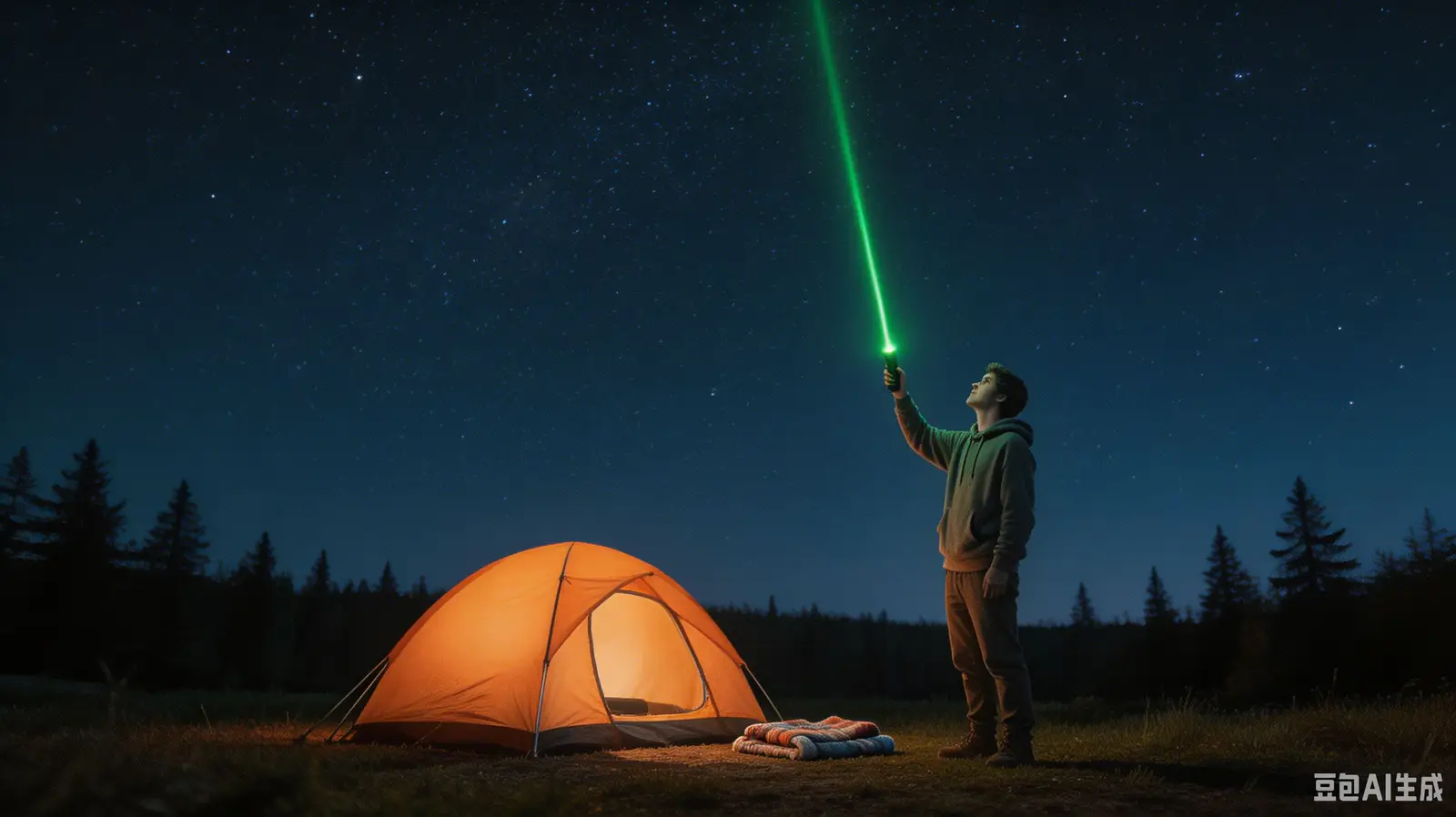
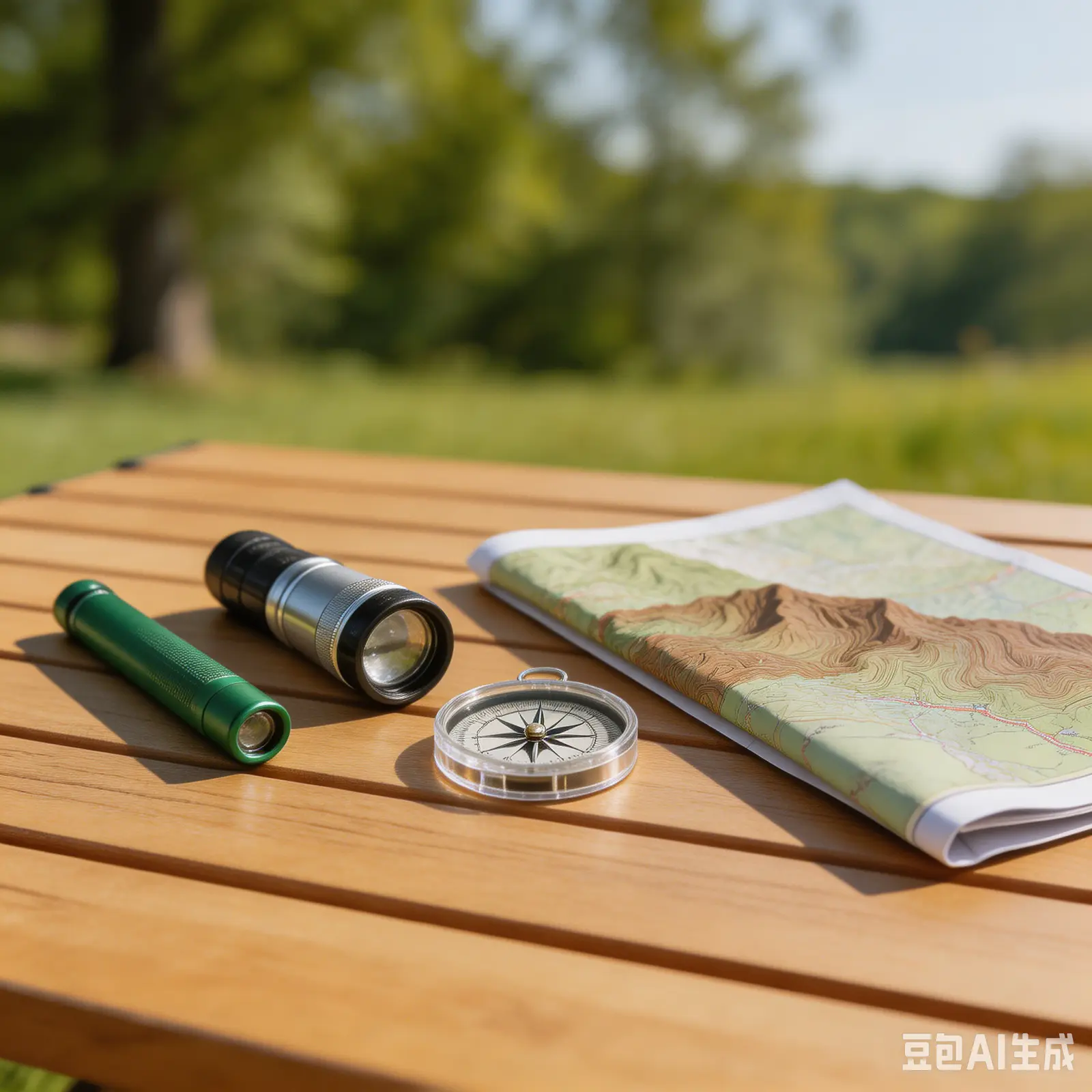
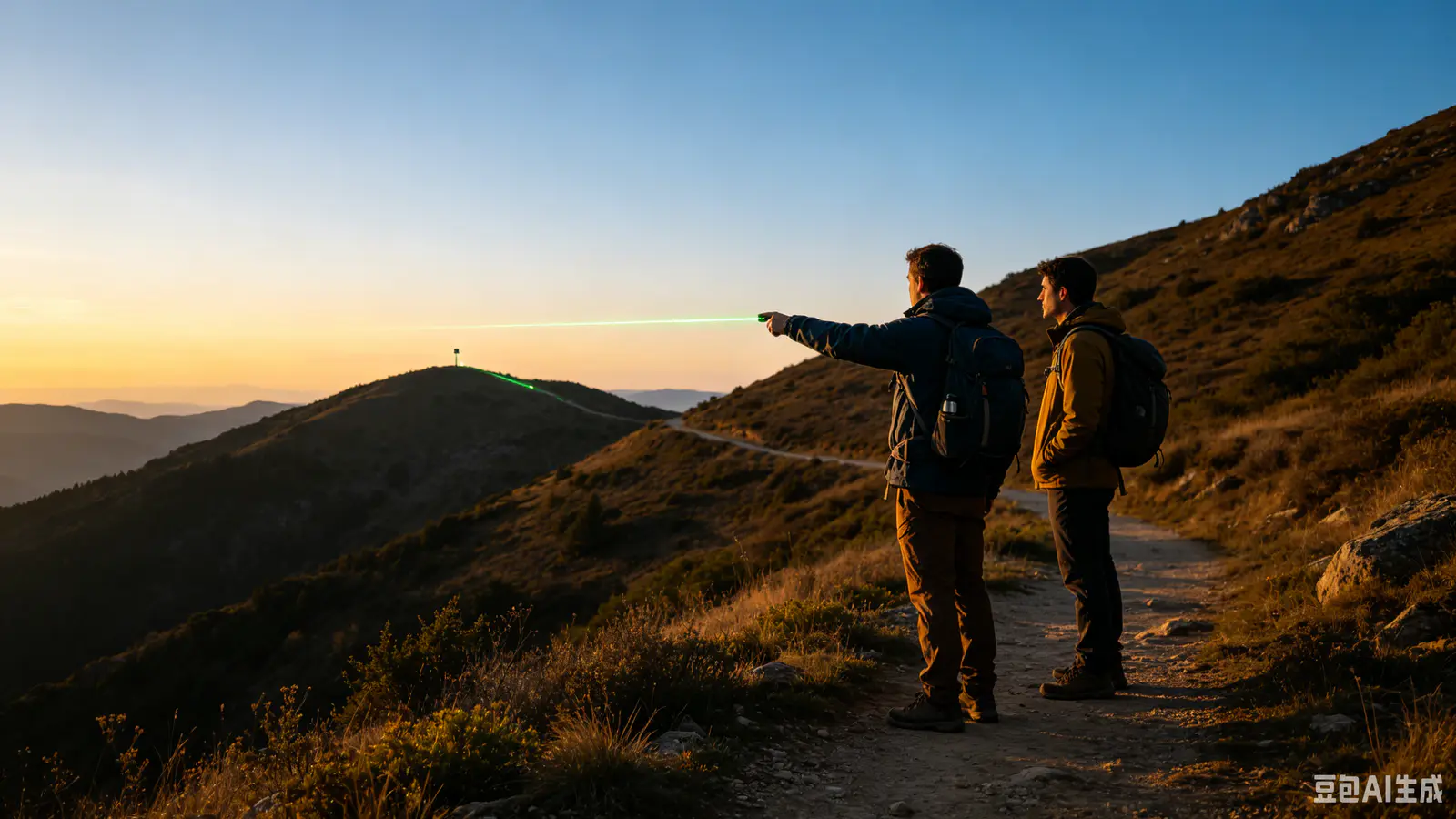
The best laser pointer for outdoor use is not the same device for every scenario. Whether you need to signal a rescue aircraft at night, navigate a trail after dark, or mark your campsite, the right choice depends on your specific situation.
Most outdoor enthusiasts buy a generic green pointer and assume it will work for emergencies. The reality is more complex: narrow beams, cold-weather failure, and federal laws against aiming at aircraft make the choice far more specific. This guide breaks down the four types of best laser pointer for outdoor use, when each makes sense, and when you should reach for a different tool entirely.
Key Takeaways
- There are four distinct categories of outdoor laser devices: standard pointers, rescue flares, high-power handhelds, and LEP flashlights, each serves a different purpose and has a different legal profile.
- High-power handheld lasers (1W+) from Laserpointerhub are ideal for group coordination, trail marking, and campsite signaling but must never be aimed at aircraft.
- Green lasers using 520nm direct diode technology (like the B030 Elite and B025 Compact) maintain stable output in cold weather where traditional 532nm DPSS lasers fail.
- Budget laser pointers under $50 on Amazon routinely advertise inflated specs, verified power measurements from a calibrated LPM are the only way to confirm actual output.
Quick Specs: Recommended Outdoor Lasers from Laserpointerhub
- B030 Elite 520nm Green Laser Flashlight: 520nm green / >1mW / 18650 / $119, Astronomy & SOS built-in
- B016 Professional Pocket Blue Laser 6000mW: 450nm blue / 6000mW / 18650 / $149, Pocket-sized high power
Which Best Laser Pointer for Outdoor Use Is Right for Your Needs?
Before looking at specific products, identify your primary use case. The market for the best laser pointer for outdoor use is not one category, it is four distinct device types, each with different strengths, legal profiles, and limitations.
You need a signaling tool for rescue. If your main concern is getting found by search and rescue, a dedicated rescue laser flare (fan-beam design, <5mW, Class 3R) is the only legally protected option for aircraft signaling. High-power handheld lasers, while visible over long distances, carry legal risk if pointed at aircraft and are not recognized as emergency signaling devices under federal law.
You need a coordination tool for group activities. If you are leading a hiking group, coordinating support boats, or marking a landing zone at night, a high-power handheld laser (1W+) gives you a visible beam that teammates can spot from miles away. The B030 Elite 520nm Green Laser Flashlight from Laserpointerhub is specifically designed for this role with an astronomy and SOS-ready form factor.
You need an everyday carry tool for occasional outdoor use. A compact, pocketable laser like the B016 Professional Pocket Blue 6000mW or the B025 Compact Green 1.5W serves double duty: it fits in your pack for everyday use and can serve as a signaling backup in an emergency.
4 Types of Best Laser Pointer for Outdoor Use Compared
1. Standard Laser Pointers, Light, Cheap, Limited
Standard laser pointers, typically under 5mW and Class 2 or 3R, are what most people think of when they hear "laser pointer." They are inexpensive, widely available, and legal for general use. But for outdoor and survival applications, they have significant limitations.
The beam of a standard 5mW green pointer is visible at night for perhaps a few hundred meters under ideal conditions. In fog, rain, or any ambient light, that range drops dramatically. As one Reddit user on r/Survival put it: "The laser is too narrow. You can't see the beam unless it's right in your eye."
For casual campsite pointing or showing constellations to fellow hikers, a standard pointer works fine. For emergency signaling, it is a poor choice. The duty cycle on most cheap pointers is also inadequate for sustained outdoor use, they overheat within minutes of continuous operation. For a deeper look at laser visibility across different conditions, read our guide on how far a laser pointer can go.
2. Rescue Laser Flares, Built for Emergency Signaling
Rescue laser flares are a distinct product category. Unlike standard pointers that emit a narrow dot, devices like the Greatland Rescue Laser Flare use a fan-shaped beam designed to be visible from aircraft. They are typically Class 3R (<5mW), which keeps them within FDA limits for pointing devices, and are explicitly recognized under 18 U. S. C. §39A as "laser emergency signaling devices."
ICE pilot Gary "Suds" Sudhoff tested the Rescue Laser from an aircraft and documented visibility ranges of 15 miles at night, 8 miles in rain, and 1.5 miles in fog and daytime conditions. These are real, verified numbers, not marketing claims. The FAA laser incident database confirms that aiming any laser at an aircraft remains a serious safety concern with over 10,000 reported strikes annually.
The trade-off is that rescue laser flares are single-purpose devices. They cost more than standard pointers and do nothing beyond signaling. They also require practice to use effectively: like a signal mirror, the narrow beam must be aimed precisely at the target.
3. High-Power Handheld Lasers, Visible, Versatile, Must Be Used Responsibly
This is where Laserpointerhub's product lineup excels. High-power handheld lasers (1W to 7W) produce beams visible for miles at night, making them effective for group coordination, trail marking, and non-aviation signaling. The beam divergence and power stability of these devices are measurable, Laserpointerhub publishes real specifications, not inflated claims.
Price-tier breakdown. Budget handheld lasers under $50 on Amazon routinely advertise 50000mW but deliver a fraction of that when measured on a calibrated LPM (laser power meter). Mid-range devices in the $80-150 range, like the B017 1600mW Blue and B016 6000mW Pocket Blue, offer verified specs with consistent output. For guidance on how to verify actual laser output, check our laser pointer power testing guide.
Premium options at $180-320, such as the G019 Professional Focusing Laser and B020 8000mW High Power Laser, use genuine Nichia diodes and copper modules with proper thermal management. A NIST-traceable power measurement is the only reliable way to confirm actual output, anything else is guesswork.
The B030 Elite 520nm Green Laser Flashlight ($119) is purpose-built for outdoor use. Its 520nm direct diode green laser performs significantly better in cold weather than traditional 532nm DPSS lasers. Direct diode green lasers like the 520nm B030 and B025 maintain stable output down to much lower temperatures than frequency-doubled DPSS designs.
For those who need maximum visibility at range, the B022 Nichia Precision Blue Laser 4W ($149) delivers a sustained beam with excellent coherence, while the B016 Professional Pocket Blue 6000mW ($149) packs serious power into a pocket-friendly form factor.
The G019 Professional Focusing Laser 4W Blue / 2W Green ($319) offers dual-wavelength flexibility: switch between blue and green depending on conditions (green cuts through haze better; blue delivers more visible power at close range). It uses a genuine Nichia diode, which is the industry standard for stable, sustained beam output, a key differentiator from generic unbranded diodes that drift in power and wavelength.
[embedded video: https://www.youtube.com/watch?v=3fEd2vEtfO0]
4. LEP Flashlights, Extreme Range, Different Use Case
LEP (Laser Excited Phosphor) flashlights are a separate category from laser pointers. They use a laser diode to excite phosphor, producing a tight, far-reaching white beam. Products like the Acebeam Terminator M1 (1600m throw) and Nitecore P35i (1804 yards) are not laser pointers in the traditional sense, they are searchlights.
LEPs compete for a different buyer: someone who needs to identify objects at extreme distances rather than signal or point. If you need to spot trail markers 500 meters away, an LEP is overkill. If you need to identify a landmark at 1500 meters, it is the right tool.
For the purposes of this guide, LEPs are mentioned so you can rule them out if your need is signaling or pointing. They do not replace a laser pointer for emergency signaling or group coordination.
Emergency Signaling Decision Matrix
How to Choose the Right Device for Your Outdoor Activity
The device you need depends on the specific outdoor activity you are planning, not on general assumptions about what a laser can do.
For group hiking and trail coordination. A high-power handheld laser is ideal for marking turns, signaling meeting points, and confirming positions at night. The B030 Elite 520nm produces a beam visible at significant range, allowing separated hikers to confirm they are on the correct trail without relying on phone signals or headlamp flashes that get lost in distance.
For campsite setup and evening activities. A compact laser like the B025 1.5W Green or the B016 6000mW Pocket Blue provides enough power for marking tent locations, signaling meal times, or pointing out trail features in the dark. The pocket form factor means it takes minimal space in a day pack.
For base camp organization on multi-day trips. A dual-wavelength device like the G019 Professional Focusing Laser (available in both blue and green) gives you flexibility: use green for general pointing and blue for maximum visibility in hazy or dusty conditions. The focusing mechanism allows adjusting beam width for close-range work or long-range marking.
What to avoid. Standard pen-style laser pointers under 5mW are inadequate for any outdoor use beyond casual pointing. Their narrow beam and low power output make them nearly invisible beyond 200 meters, and they lack the duty cycle needed for sustained operation. Buy a device rated for outdoor conditions rather than repurposing an office presentation pointer.
Laser Classification & Regulatory Compliance for Outdoor Devices
FDA Device Classification, What Are You Actually Buying?
The FDA laser pointer regulations restrict products marketed as laser pointers to visible wavelengths (400-710nm) and maximum output of 5mW. Devices above 5mW, including all of Laserpointerhub's high-power handhelds, are regulated as Class 3B or Class 4 laser products for industrial, scientific, and outdoor applications, not as pointers.
This classification determines where and how you can use the device. Class 3R devices (1-5mW) like the B030 Elite offer a practical balance of visibility and regulatory simplicity for general outdoor use. Class 3B and Class 4 devices (5mW to 7W) like the B016, B022, and G019 deliver higher performance but require more responsible handling, particularly around other people.
Comparing Laser Classes for Outdoor Applications
Aircraft Safety Compliance
Federal law under 18 U. S. C. §39A generally prohibits aiming any laser at an aircraft. Over 10,000 incidents are reported annually to the FAA. A medical study on laser pointer eye injuries confirmed that even devices around 5.8mW can cause permanent retinal damage, reinforcing why responsible use matters regardless of device class.
If you carry a Laserpointerhub high-power laser for outdoor use, keep the beam at ground level and use it for trail marking and group coordination only.
Weather, Temperature & Battery Performance
Why Green DPSS Lasers Die in the Cold
Traditional 532nm green lasers use DPSS (Diode-Pumped Solid State) technology, which relies on a temperature-sensitive crystal set to convert infrared to green light. Below approximately 50°F, the crystal efficiency drops sharply, and output can fade to near-zero within minutes.
Laserpointerhub's 520nm green lasers, such as the B030 Elite and B025 Compact Green, use direct diode technology instead of DPSS. Direct diode green lasers do not require frequency-doubling crystals, which means they maintain stable output across a much wider temperature range. For winter hiking, camping, or high-altitude use, 520nm direct diode green is the clear choice.
Battery Strategy for Outdoor Use
Cold temperatures drain lithium-ion batteries faster. For outdoor use, choose devices compatible with standard 18650 cells (the B030, B025, B022, B016, and G019 all use 18650 batteries). Carry a spare 18650 in an inner pocket close to your body to keep it warm.
For extended backcountry trips, devices with dual power options offer redundancy. If you prioritize pocket-friendly carry for everyday use, our small pocket laser pointer EDC guide covers the best compact options for outdoor adventures.
Daytime Limitations
Most laser pointers, regardless of power, are not reliable daytime signaling devices. Practical Sailor's field test confirmed that even rescue-grade lasers achieve only 1.5 miles of visibility in bright sunshine.
The ICE pilot data corroborates this: daytime airborne visibility was roughly 1.5 miles regardless of device. If you need daytime signaling capability, a signal mirror (which uses reflected sunlight) or a PLB (which uses satellite networks) is more appropriate.
When NOT to Buy a Laser for Outdoor & Survival Use
This is the section most outdoor laser articles avoid. The honest answer: a laser is often not the first tool you should pack for emergencies.
Personal Locator Beacon (PLB) or Satellite Messenger. If your primary concern is being found in a life-threatening emergency, a PLB (such as an ACR ResQLink) or satellite messenger (Garmin inReach) provides global coverage, works in any weather, and triggers a coordinated search response. A laser cannot do any of these things.
Signal Mirror. A simple glass signal mirror weighs nothing, never runs out of batteries, and can be visible from aircraft at distances of 10+ miles in daylight. Every survival kit should include one before adding a laser.
Headlamp with Strobe. A headlamp with an SOS strobe mode is more likely to be recognized as a distress signal than a laser beam. It also serves your primary need, seeing in the dark, which a laser does not.
Whistle. Three blasts on a whistle is universally recognized as a distress signal. It works in fog, rain, and dense forest where a laser beam would be invisible.
The "Laser Last" rule: Pack a PLB or satellite messenger first, a signal mirror second, a whistle third, a headlamp fourth, and a laser fifth. A laser is a supplement to these tools, not a replacement.
Frequently Asked Questions
Would a laser pointer make for a good rescue beacon?
A standard laser pointer is a poor rescue beacon. The beam is too narrow, requires precise aiming, and carries legal risk if pointed at aircraft. Dedicated rescue laser flares (fan-beam design, <5mW) perform better and have a legal exception for emergency signaling, but even they work best as a supplement to a PLB or satellite messenger.
How practical is it to keep a powerful green laser in a survival kit while hiking?
It depends on the laser type. A 532nm DPSS green laser is impractical because it stops working in cold weather. A 520nm direct diode green laser, like Laserpointerhub's B030 Elite or B025 Compact, handles cold temperatures much better and is a practical addition to a hiking survival kit, as long as you understand its limitations for emergency signaling.
What is the best outdoor laser pointer for hiking and camping?
For hiking and camping, the best choice is a direct diode green laser (520nm) that uses standard 18650 batteries. The B030 Elite 520nm Green Laser Flashlight is specifically designed for outdoor use with an astronomy and SOS-capable form factor. For those who want maximum visibility, the B016 Professional Pocket Blue 6000mW provides high output in a portable package.
Can I use a laser pointer to signal a rescue aircraft?
Only if you are using a dedicated laser emergency signaling device (a rescue laser flare) in a genuine emergency. Standard laser pointers and high-power handheld lasers should never be aimed at aircraft. Doing so is a federal crime with penalties up to $32,646 per violation under FAA regulations and potential criminal prosecution under 18 U. S. C. §39A.
Is a green or blue laser better for outdoor use?
Green lasers (520nm) are more visible to the human eye at the same power level, making them better for general outdoor use. Blue lasers (450nm) deliver more raw power per dollar and produce a more visible beam in dusty or hazy conditions.
For cold-weather outdoor use, choose 520nm direct diode green (like the B030 or B025) over 532nm DPSS green. For maximum range at night, a high-power blue laser like the B022 4W or B016 6000mW offers the best beam visibility. Always verify advertised specs against real measurements, NIST-traceable calibration is the only way to confirm actual output power.